13.2.2025

What is PoS marketing?

Point of Sale (PoS) marketing, or in-store marketing, refers to marketing that takes place at the point of sale, with the aim of influencing the purchasing decisions of customers in the store.

Point of Sale marketing, or in-store marketing, refers to promotional activities that take place at the point of purchase, aimed at influencing customers’ buying decisions while they are in the store. Product displays, price communication, and advertising campaigns are central elements of in-store marketing, and these tools are used to enhance the customer experience and drive sales. Traditionally, PoS marketing has consisted of printed posters on walls, promotional stands, paper shelf labels, and brochures on counters. Today, however, we are firmly in the digital era, and in-store marketing has finally evolved from its paper-based roots into the digital age. 

This article explores traditional in-store marketing methods alongside their modern digital counterparts. Well-designed PoS marketing not only drives sales but also reinforces brand image and differentiates the store from its competitors.

Traditional in-store marketing methods – familiar and trusted paper

Traditional in-store marketing methods have long been the primary – and often only – means of engaging customers. In-store product promotion has relied on posters, floor stickers, shelf talkers, and cardboard display stands. The advantage of these methods is that they are familiar and established. They effectively attract attention and guide customers toward products, but they also have their limitations.

Updating printed materials takes time and resources, and campaign changes often require ordering new materials from an advertising agency, waiting for them to be produced, and installing them by hand. All of these steps can make managing campaigns cumbersome and add to the store’s operational costs. In addition, the attention value of static in-store marketing leaves much to be desired, and it does not always respond quickly to rapidly changing demand.

Digital PoS marketing methods

Digital technology has brought many new opportunities to in-store marketing. Digital marketing solutions offer increasingly effective ways to influence a customer’s purchasing decision. Through video, they can tell the customer a story about the products on display and thereby sell them more effectively. Key digital PoS marketing methods include:

Digital displays

These enable dynamic advertising and the presentation of various offers in an engaging way. Video is proven to capture customers’ attention more effectively than traditional paper advertising signs, and frees up store staff’s time so they can focus on serving customers.

Interactive solutions

Customers can use touchscreens or scan QR codes to get more information about products or take part in campaigns. This allows customers to find information for themselves without necessarily needing the assistance of a sales assistant.

Dynamic pricing

Adjusting prices in real-time based on the competitive landscape can significantly improve sales efficiency. Competitors’ pricing can be monitored, for example, and price changes implemented automatically using electronic shelf labels.

Electronic shelf labels

ESLs enable real-time updates of prices and campaign data, improving the customer experience with up-to-date product information. They also enable dynamic pricing, where prices update automatically in response to demand.

Digital PoS marketing methods

Digital technology has brought many new opportunities to in-store marketing. Digital marketing solutions offer increasingly effective ways to influence a customer’s purchasing decision. Through video, they can tell the customer a story about the products on display and thereby sell them more effectively. Key digital PoS marketing methods include:

Digital displays

These enable dynamic advertising and the presentation of various offers in an engaging way. Video is proven to capture customers’ attention more effectively than traditional paper advertising signs, and frees up store staff’s time so they can focus on serving customers.

Interactive solutions

Customers can use touchscreens or scan QR codes to get more information about products or take part in campaigns. This allows customers to find information for themselves without necessarily needing the assistance of a sales assistant.

Dynamic pricing

Adjusting prices in real-time based on the competitive landscape can significantly improve sales efficiency. Competitors’ pricing can be monitored, for example, and price changes implemented automatically using electronic shelf labels.

Electronic shelf labels

ESLs enable real-time updates of prices and campaign data, improving the customer experience with up-to-date product information. They also enable dynamic pricing, where prices update automatically in response to demand.

The purpose of PoS marketing

The primary goal of PoS marketing is to grow sales by influencing the customer’s purchasing decision while they are in the store. This is achieved by enhancing the store’s visual appeal, ensuring that products are displayed clearly and attractively, and providing customers with added value through informative and engaging marketing solutions. Well-executed PoS marketing helps stores stand out from their competitors and improves the customer experience, as customers find it easier to locate products and get information about offers.

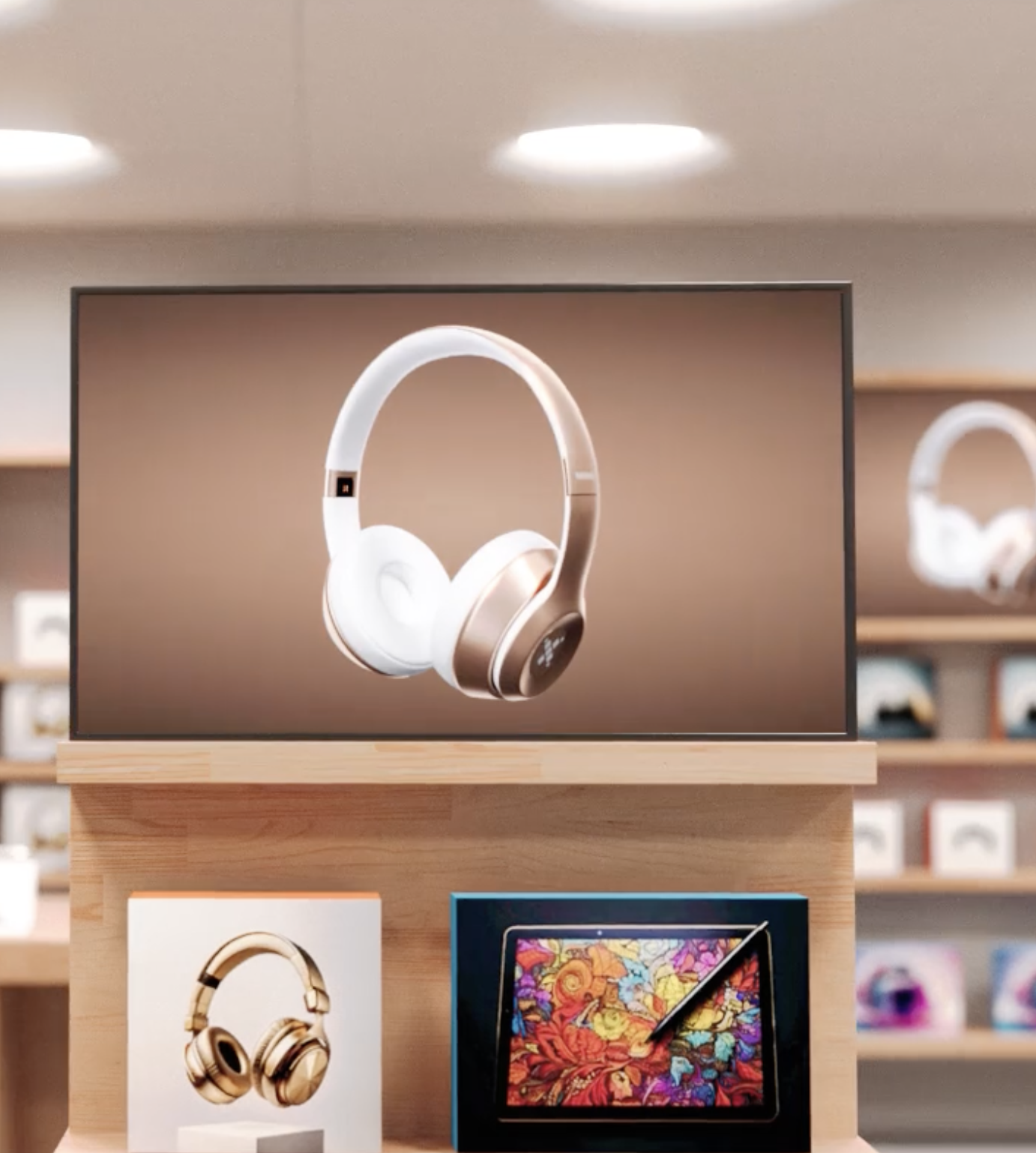
Digital signage -mainosnäyttö myymälässä, jossa on beigellä taustalla valkoiset kuulokkeet.

Furthermore, PoS marketing fosters customer loyalty. When a customer finds the store environment pleasant and approachable, they are more likely to return to shop there. Engaging advertising videos and displays placed close to products, along with informative solutions, can encourage customers to buy more and return to the store again.


Digital signage as part of the modern store experience

In-store marketing is an effective way to influence a customer’s purchasing decision in the store. It can be implemented using either traditional or digital methods, but digital PoS marketing offers significant advantages in terms of effectiveness and flexibility. The key points are:

  • Traditional marketing methods, such as physical signs and campaign areas, require a great deal of manual work and resources.
  • Digital solutions, kuten electronic shelf labels and digital signage displays, enable faster and more precise updates.
  • Interactive solutions can enhance the customer experience and engage customers more effectively.
  • Dynamic pricing gives the store the ability to respond quickly to the competitive situation.
  • Well-designed in-store marketing improves store efficiency and customer satisfaction.

In the future, the importance of digital solutions will continue to grow, and stores that make use of modern PoS marketing methods will be able to offer their customers a better shopping experience and gain a competitive advantage.