17.9.2025

Targeted messaging makes the shopping experience feel personal

Online advertising is targeted, but in physical stores, it is rarely utilised. Personalisation can boost sales and improve the customer experience.

Targeted messaging is commonplace online. Based on our browsing behaviour, purchase history, and the search terms we use, we constantly receive messages that feel tailor-made for us. In physical retail, however, this kind of personalisation is often unused, even though the means are available and the impact could be significant. A well-targeted message in a retail environment boosts sales, increases impulse purchases, and improves the customer experience.


Bringing the web’s capabilities into the store

Kyva digita

Digital advertising displays

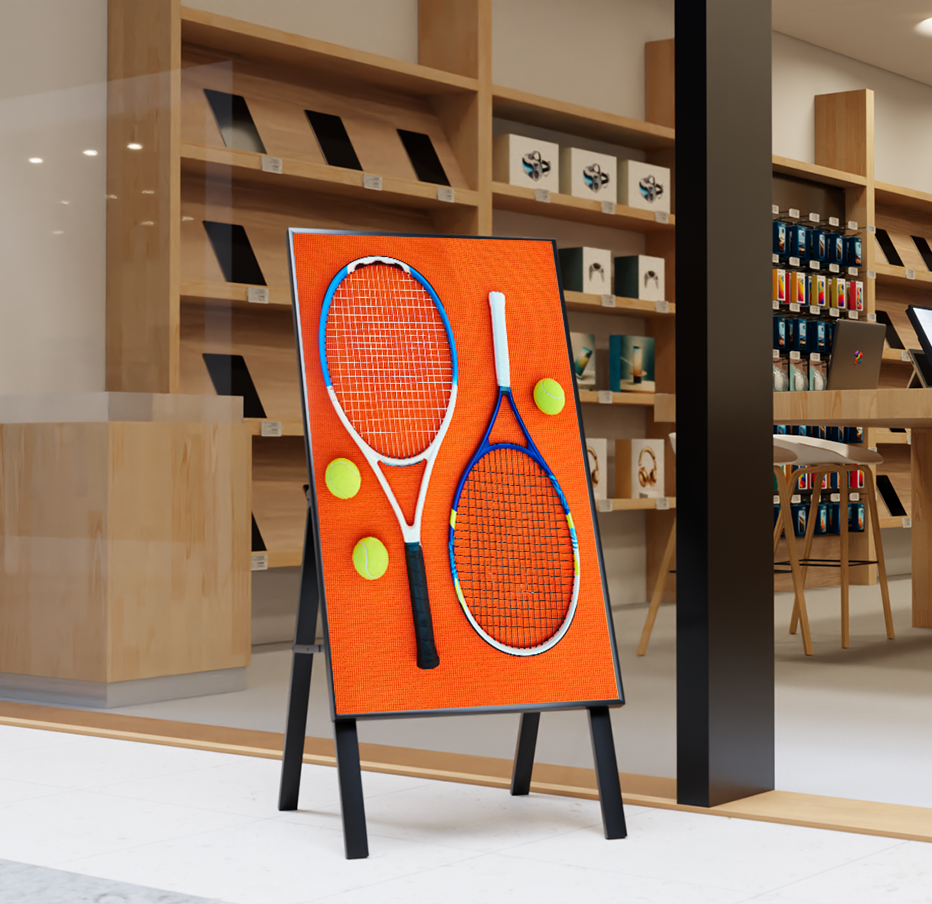
Digital advertising displays bring the personalisation capabilities of the web into the store. Screens can adapt based on the time of day or audiences identified through demographic recognition: work-related messages in the morning, leisure-related content in the afternoon.

Digitaalinen A-ständi esittää naista virtuaalilasien kanssa modernissa sisätilassa.

Demographic recognition

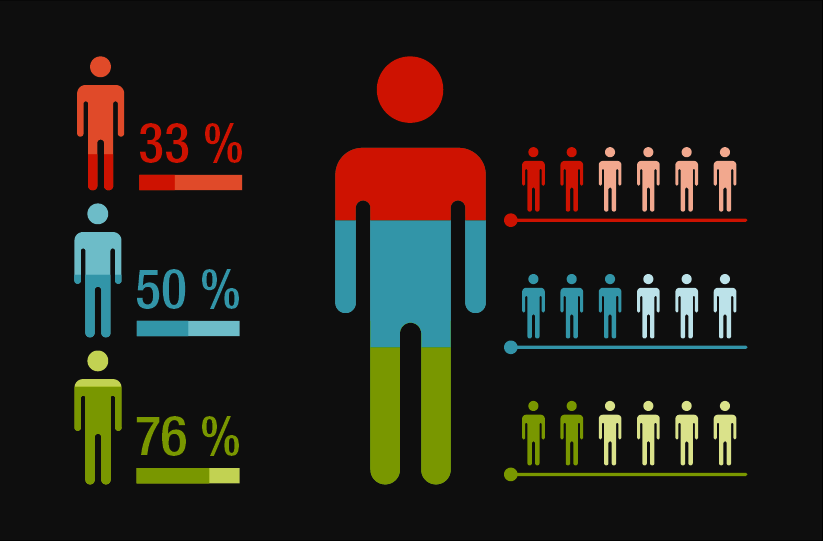
With demographic recognition, messages can also be lightly tailored for different groups — for example, younger adults and families with children can be shown slightly different content based on their interests.

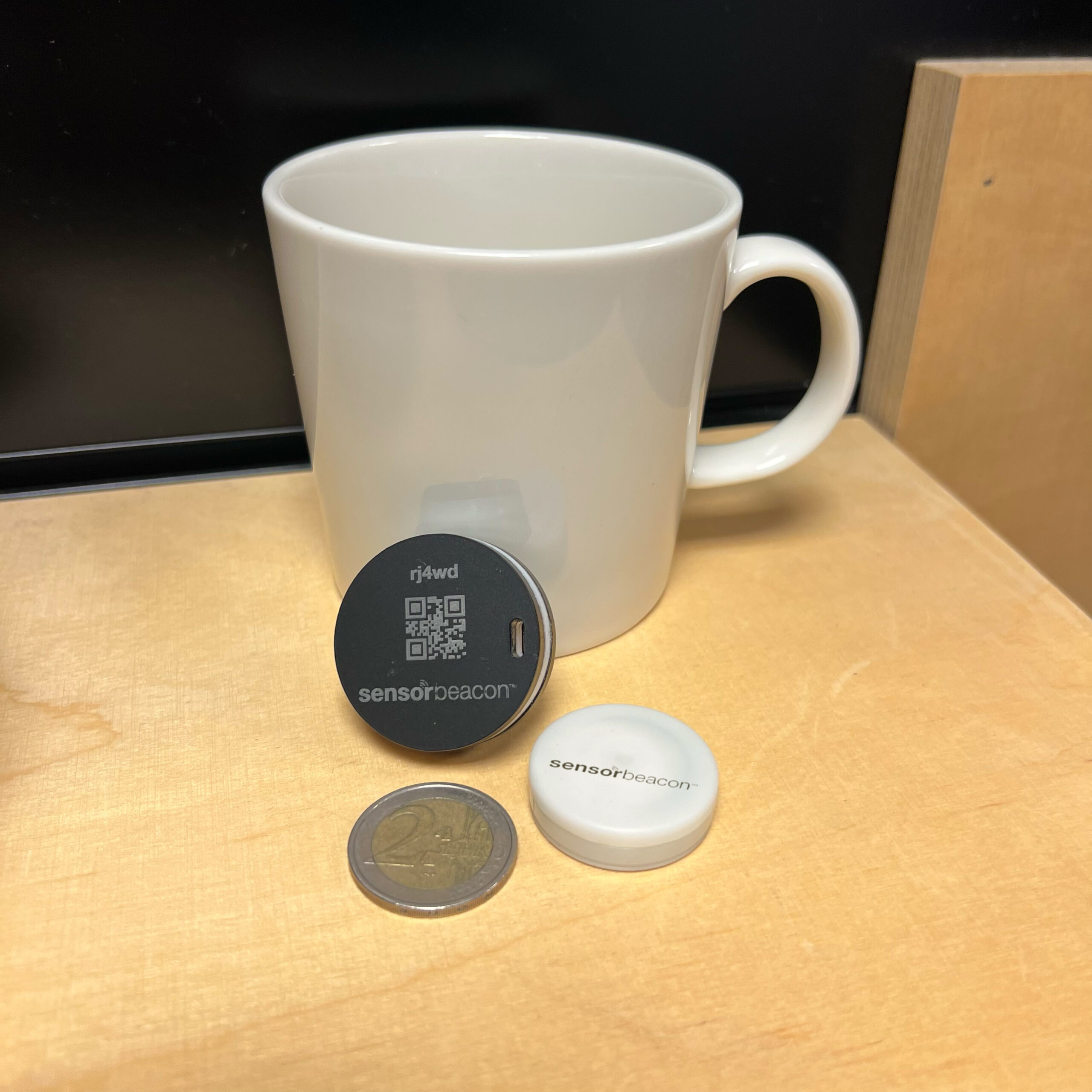
Valkoisen mukin edessä pöydällä on kaksi pyöreää sensorbeacon-laitetta ja vertailun vuoksi 2 euron kolikko.

Interactive
solutions

Interactive solutions, such as touchscreens or sensorbeacon® technology, add a further dimension to this, allowing customers to explore products and access valuable information to support their purchasing decisions.

Demographics are decisive — do your targeted messaging right

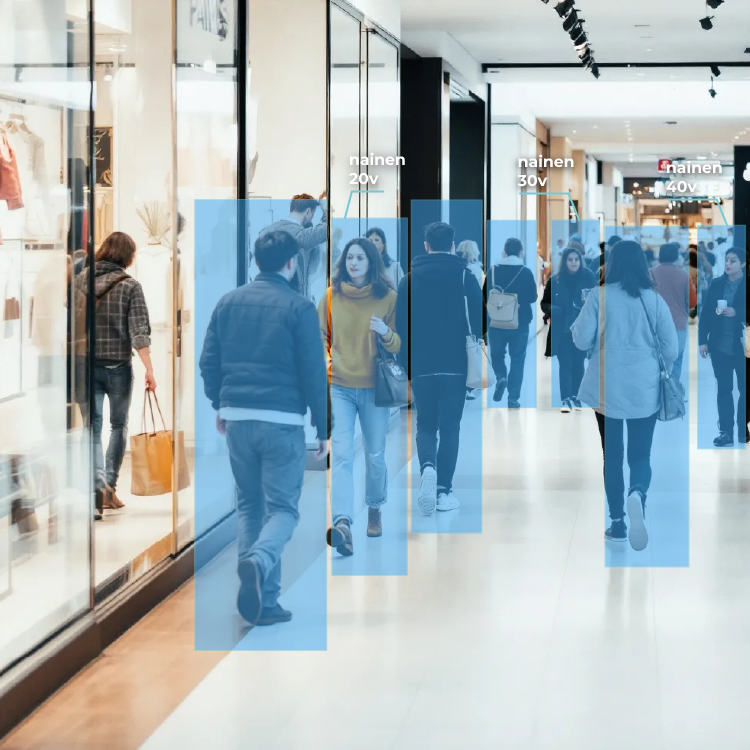
The core of in-store targeted messaging is built on demographic data. Camera-based analytics make it possible to adapt messages to the audience — whether that’s a young adult, a parent with young children, or an older shopper. The recognition doesn’t need to be precise; it’s enough that the message resonates with the target group and directs attention in the right way.

Read also: A/B testing – what works in retail marketing?

storefy Footfall & Visitor Analytics Counter is a powerful additional tool: the system identifies not only customers entering the store but also people walking past. This makes it possible to target content on the displays towards people outside the store as well, to attract visitors inside.

With the help of demographic data, messages can be tailored with precision. Younger audiences can be shown trending new arrivals and campaigns linked to social media trends. Families can be offered products that support everyday life, whilst older audiences are shown messaging that emphasises practicality, quality, and reliability. This makes communication both effective and relevant.

Timing is everything

Days

In-store messages can be scheduled precisely according to sales peaks and customer behaviour. The rhythm within a single day offers clear opportunities: in the morning, it’s often retirees or stay-at-home parents who are out and about, so messages and products can be targeted to their needs. Working-age customers tend to arrive in the afternoon or after the working day, when attention shifts towards products and services related to leisure, hobbies, or relaxation.

Weeks

There are differences between days of the week, too. On the cusp of the weekend, customers are looking for inspiration for leisure, home décor, or hobbies, whilst at the start of the week, the focus may be more on practical needs and getting everyday life running smoothly.

Seasons

Seasons and weather conditions add their own dimension. On hot days, customers’ attention turns to sunny clothing, outdoor equipment, or cooling products, whilst on cold days the emphasis shifts to warm clothing, winter sports gear, and home technology that adds comfort to everyday life.

Display placement is targeted messaging too

In a physical space, targeting doesn’t refer only to the content of the message, but also to its location. “Hot spot” areas — such as near the entrance, the checkout queue, or along customer traffic routes — are worth reserving for promotional products. When the right message meets the right location, the sales impact is immediate.

Bear these points in mind

Targeted messaging is not the exclusive advantage of e-commerce. In a physical store, by combining the possibilities of digital technology, customer data, and knowledge of sales peaks, it’s possible to create a shopping experience that feels personal and serves the customer’s needs at exactly the right moment. The result is increased customer satisfaction and a rise in sales — both equally valuable goals.