22.8.2025

Applications of digital signage – effective communication beyond the store

Digital displays have long been a familiar sight in shopping centres and stores, but their potential applications extend far wider.

Digital signage is for more than just advertising

When a system is flexible and supports various types of content, displays can be utilised in numerous situations: marketing, internal communication, customer service, or even safety information. Content does not have to be limited to video alone – a screen can display real-time weather, news, event calendars, or even social media streams. This makes digital signage a tool that adapts to the user’s needs and environment.
Retail – in-store advertising to boost sales

In stores, digital signage is the most prominent part of the shopping experience. Campaigns, new products, and special offers are easy to highlight impressively. When content can be scheduled by time of day, day of the week, or season, communication hits the mark at the right moment. For example, in the morning, displays can advertise coffee deals, and in the evening, fast food options.

Digital signage also works for customer guidance. In supermarkets, displays can guide customers to the correct department. This helps customers find what they are looking for faster, while simultaneously showcasing complementary products attractively.

Read also: Measuring marketing results in-store

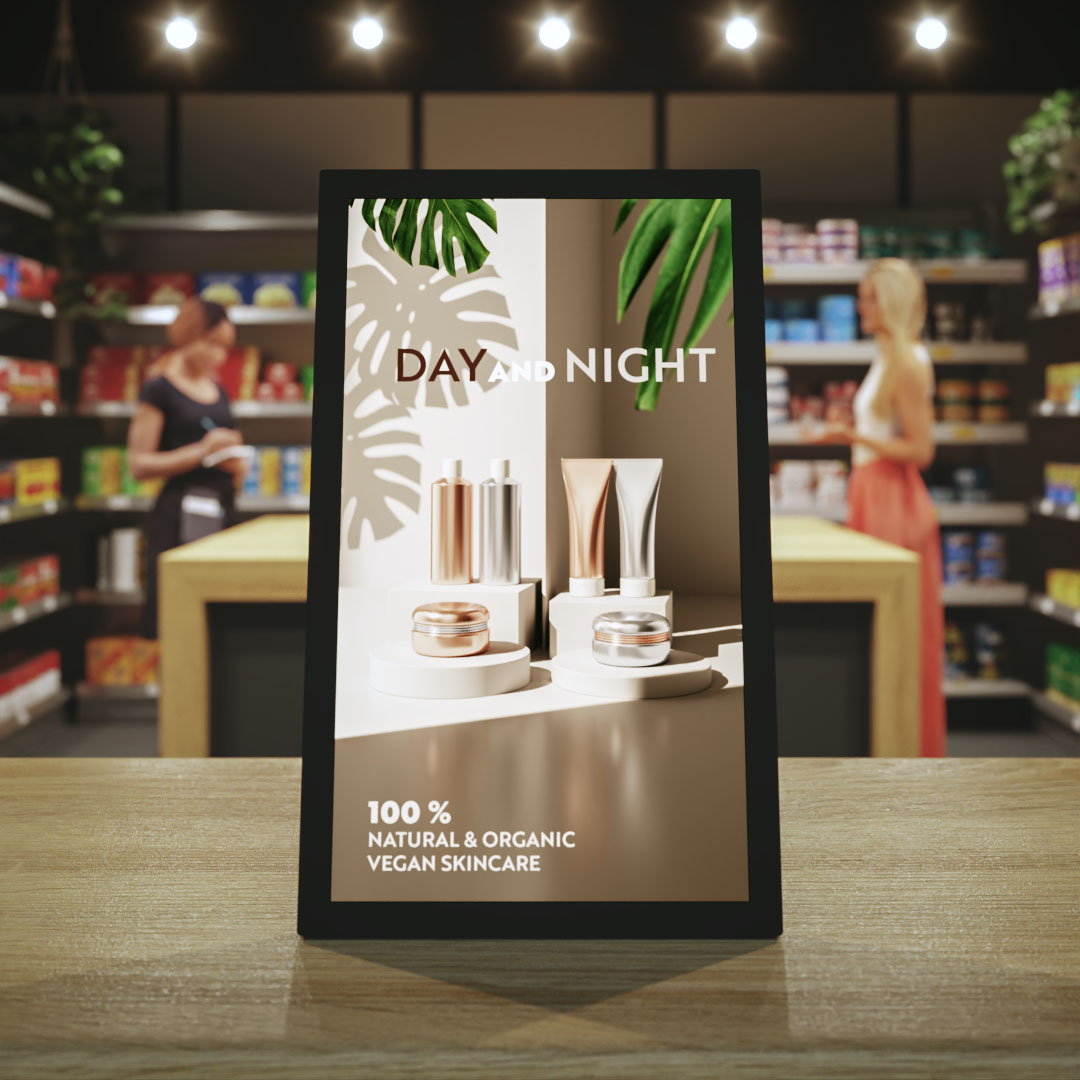
Digitaalinen pöytänäyttö esittelee luonnonkosmetiikkatuotteita vähittäiskaupan ympäristössä.
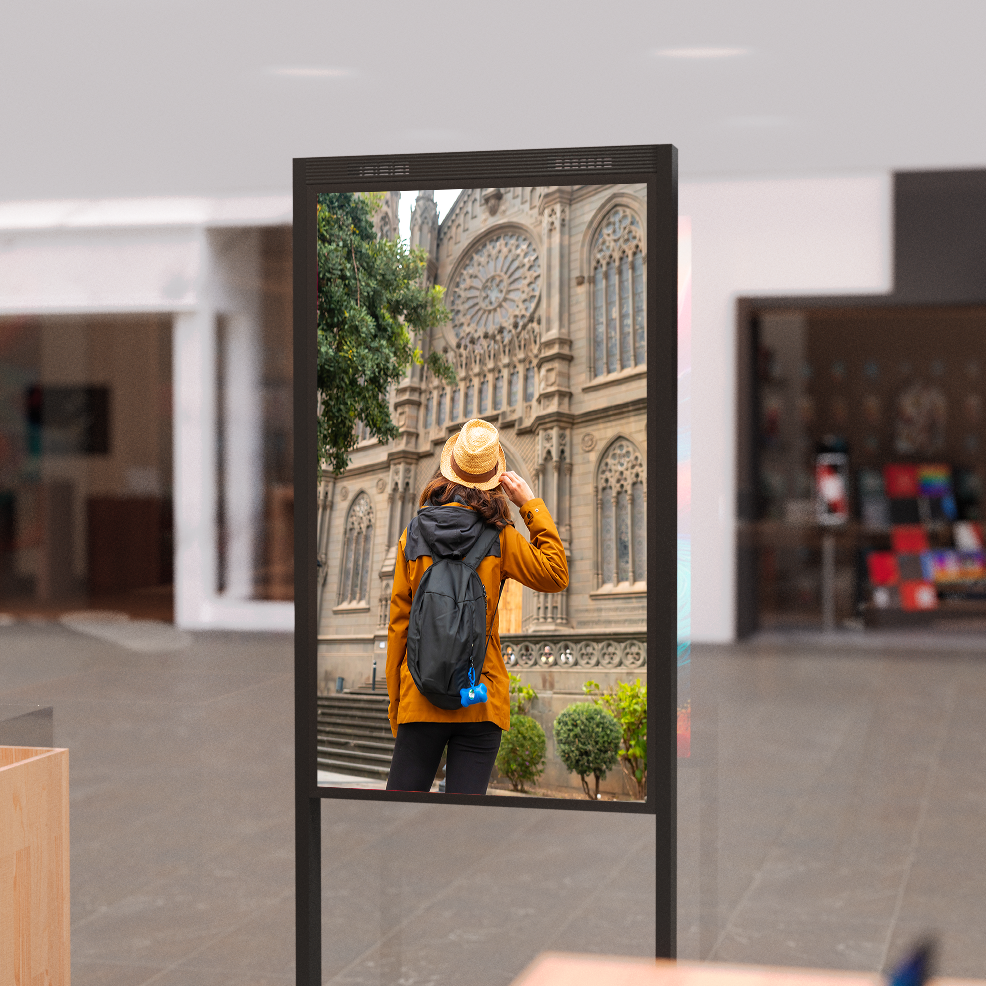
Digital signage -näyttö esittää kuvaa matkailijasta, joka ottaa valokuvaa katedraalista.

Hotels and restaurants – information and tips for experience seekers

Hotel lobbies and restaurant entrances are places where digital displays simplify daily life for both customers and staff. Menus can be updated on the fly, and the day’s specials can be displayed immediately. Screens can also announce upcoming events, showcase meeting rooms, or provide travellers with tips on local attractions. For example, a hotel guest’s check-in can begin at a screen that provides breakfast times, the hotel’s additional services, and a local weather forecast.

Read also: A better customer experience brings more sales

Transport and public spaces – digital signage ensures smooth travel

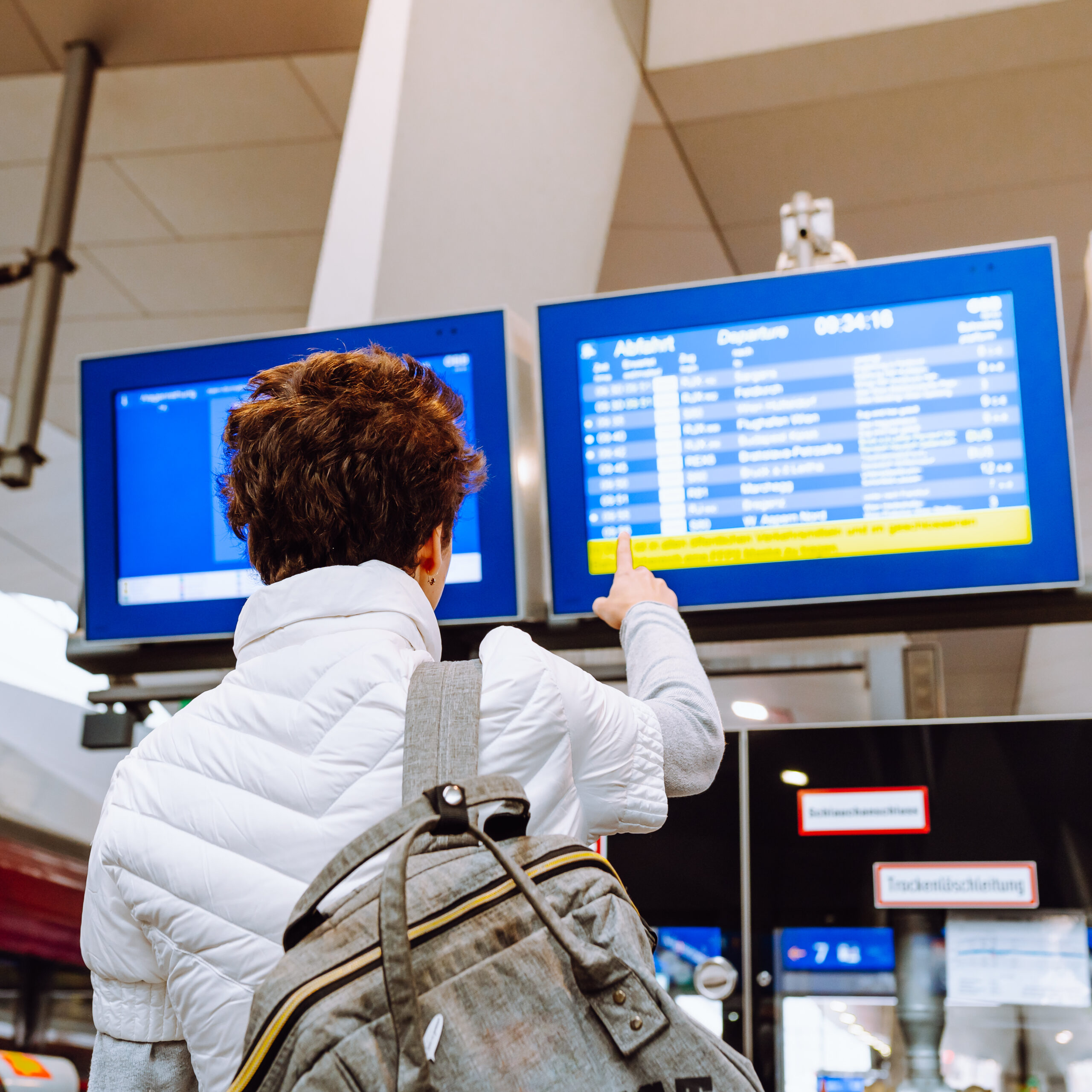
At stations, airports, and bus terminals, real-time information is essential for passengers. Digital displays can show schedules, departure gates, stops, platforms, and potential delays. When data updates automatically from the transport system, passengers stay informed, and frustration is reduced.

Safety communication is also a central part of digital signage in public spaces. In an emergency, displays can clearly provide evacuation instructions or direct people in the right direction. Thus, the display system is not just a service, but a part of comprehensive safety.


Offices and corporate communication – a shared channel for staff and visitors

In the daily life of companies, digital signage is an effective tool for internal communication. In office corridors and breakrooms, displays can share the latest news, present ongoing projects, and even highlight employees. When information is visible to everyone, it increases community spirit and can even reduce the flood of emails.

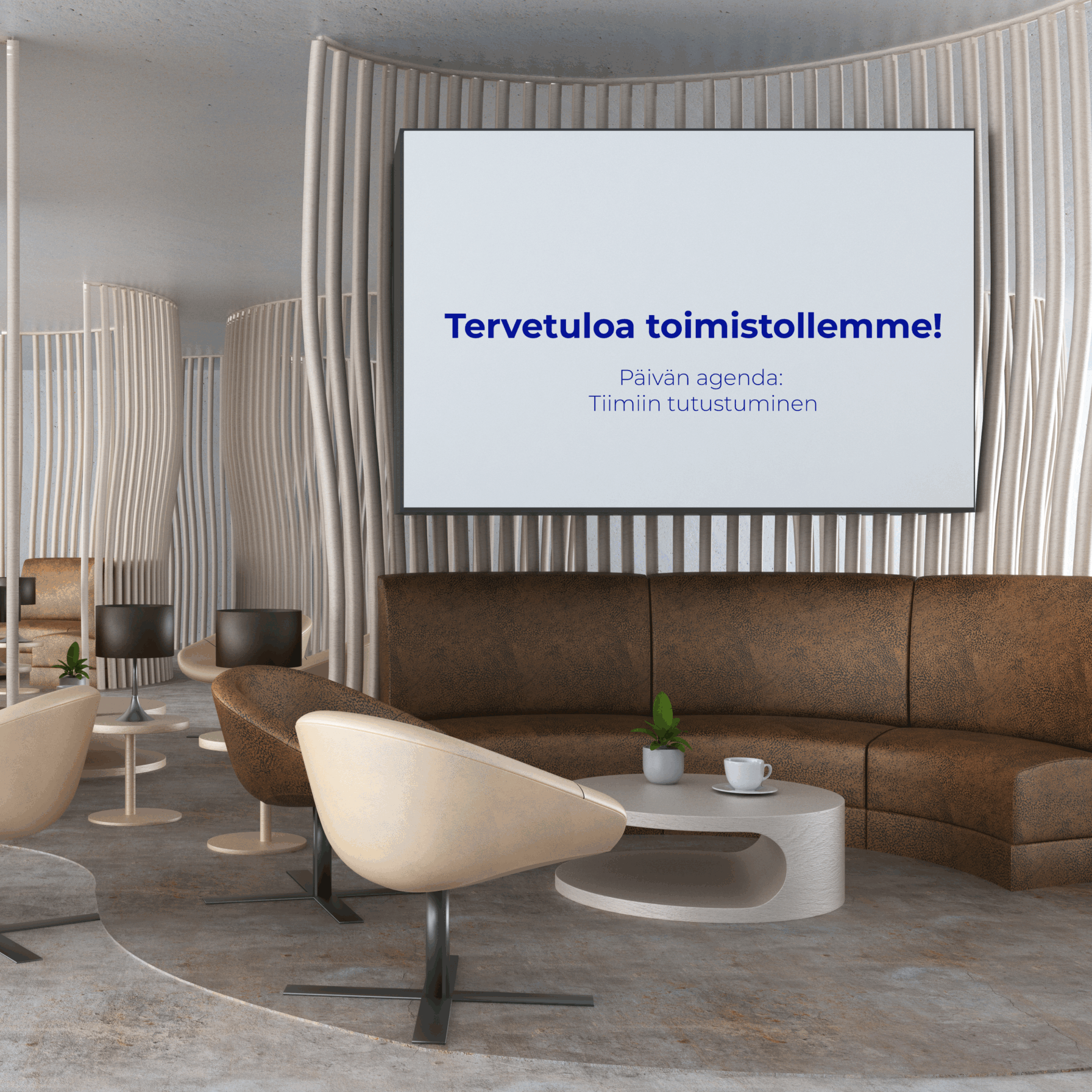
From a visitor’s perspective, the display serves as guidance and a welcome message. Near the entrance, the company’s daily schedule, meeting room bookings, or a greeting to a customer by name can be displayed. In some companies, screens also display key performance indicators (KPIs) in real time – such as production volumes or customer satisfaction metrics.

Schools and educational institutions – a modern noticeboard for campus life

Students move around campuses between different buildings and lecture halls, and traditional noticeboards are easily overlooked. Digital displays can announce events, timetable changes, and important deadlines. Screens can be placed in lobbies, cafeterias, and corridors, reaching students where they walk.

A practical example: if a lecture room changes at the last minute, the information can be updated directly from the system to the display. This reduces confusion and saves time for both students and staff.

Healthcare – clarity and comfort for waiting areas with information displays

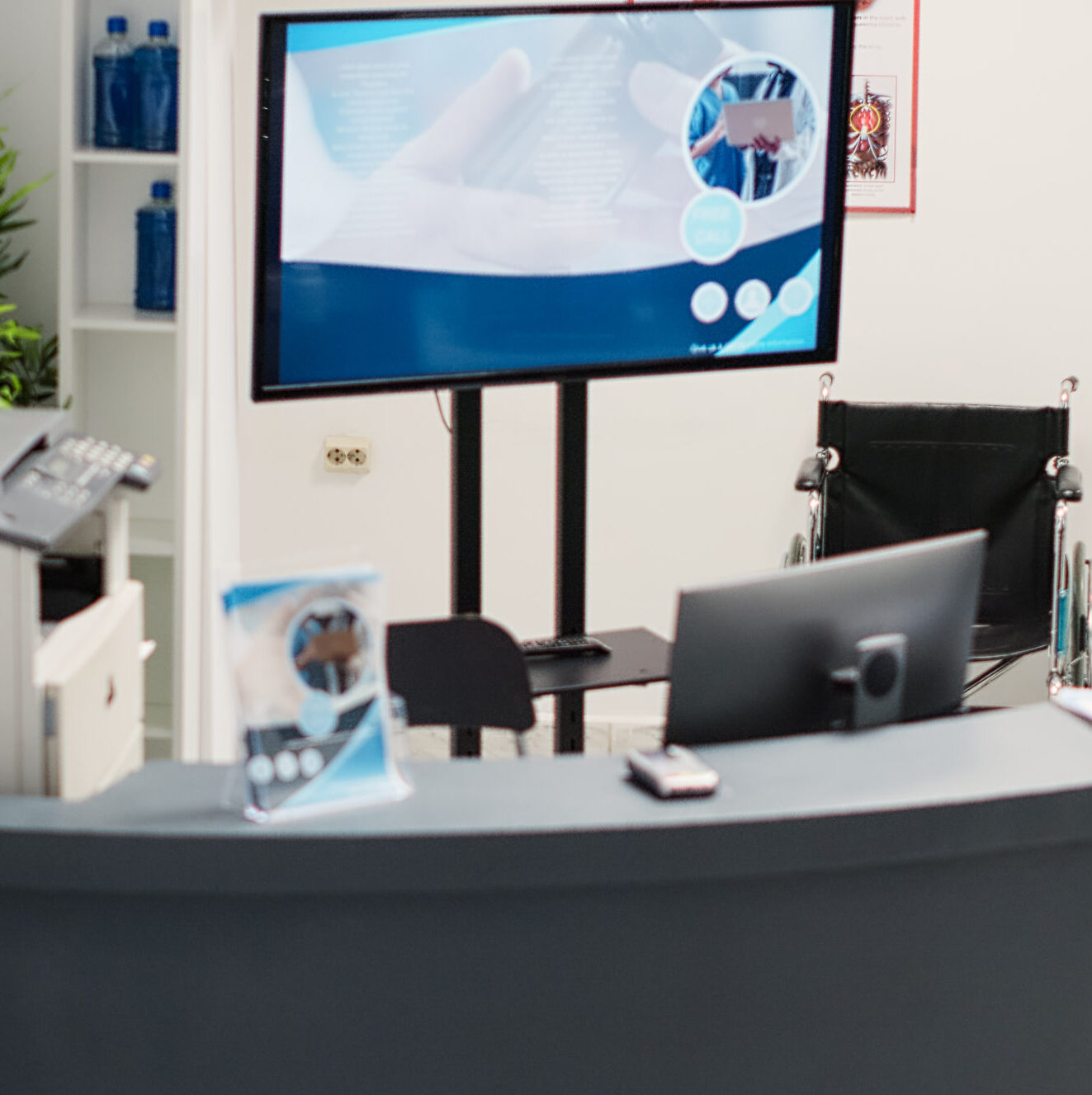
In hospitals and healthcare centres, digital signage serves both information and comfort. Queue numbers are clearly visible, and the location of the correct consultation room can be illustrated clearly. Displays can also provide information on waiting times, reducing uncertainty.

In waiting areas, content can offer calming nature scenery, news, general health information, or entertainment. Research shows that such content makes the waiting time feel shorter and improves the customer experience. In private clinics, screens can also inform patients about available services.

Entertainment and sports – part of the experience

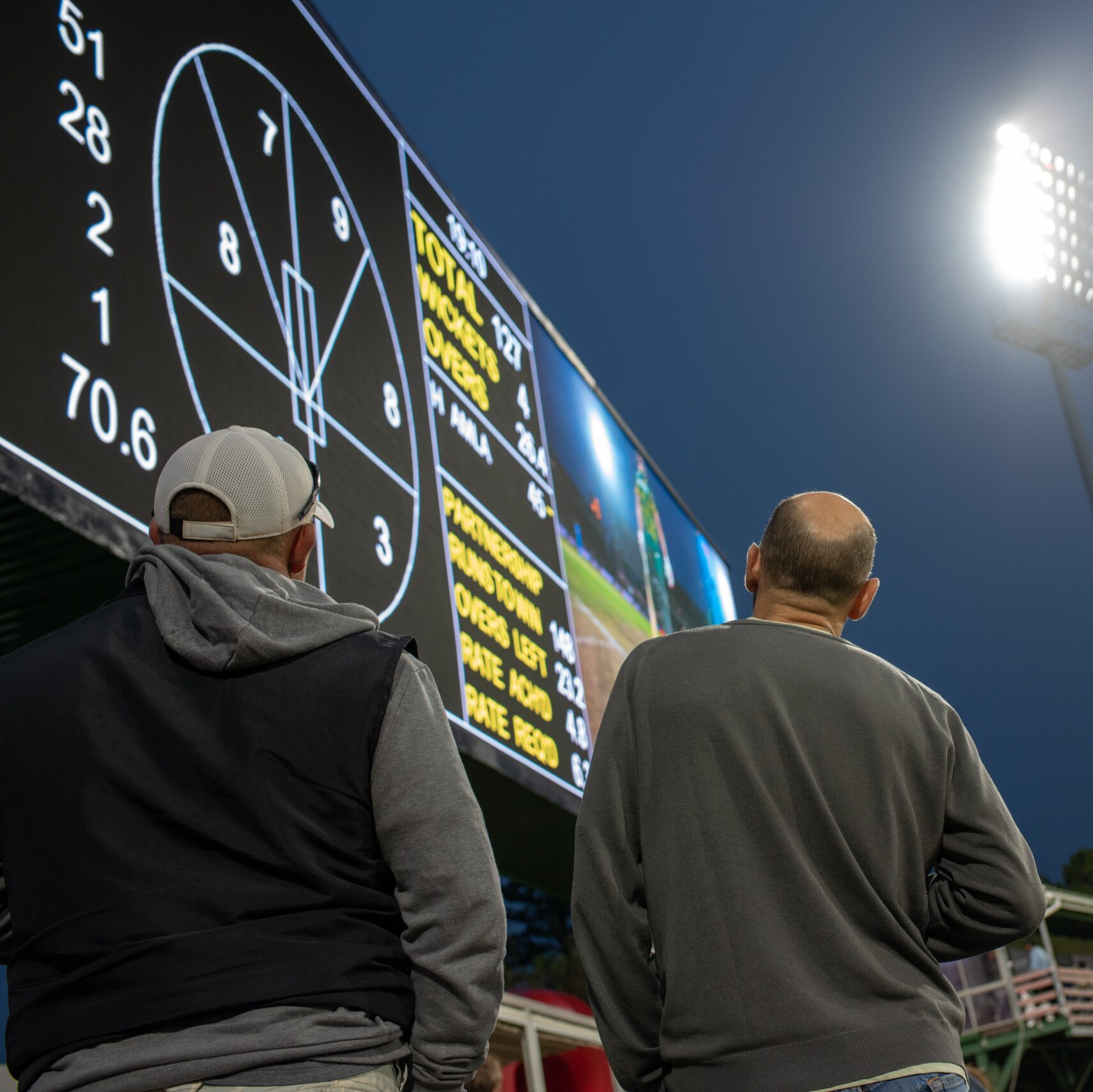
At public events and sports stadiums, digital signage is an essential part of the atmosphere. Displays can show real-time scores, replay highlights, and provide the audience with interactive content, such as competitions or social media feeds. Advertisers particularly benefit from this environment, as the message reaches an engaged and enthusiastic audience.

In hockey arenas, for example, the screen can display restaurant services and offers in addition to the game score. At festivals, displays can guide the audience to the correct areas, provide the lineup, and announce changes in real time.

Read also: Automated content creation with adbot

One system, unlimited possibilities

Digital signage is much more than a digital billboard. It is a versatile communication channel that adapts to the needs of different industries and serves customers, employees, and visitors alike. When a system supports many types of content – videos, images, live data, and feeds – the same technology can be used in very different environments. When used correctly, digital signage not only conveys information but also improves the customer experience and creates value at every touchpoint.