12.6.2026

Retail customer journey: how digital technology turns passers-by into paying customers

Physical shops face fierce competition today, and not just from the store next door, but from online retailers as well. Customers can check prices on their phones in seconds, order products to their door without queuing, and compare options from the comfort of their sofa. So why would anyone bother coming in?

The answer is customer experience

A physical retail environment can offer something online shopping never will: immediate contact with a product, expert service, and the genuine pleasure of browsing. That said, it requires the in-store customer journey to be optimised — guiding shoppers smoothly and engagingly from the entrance to the till. Digital solutions are the most powerful navigator for that journey.

Stage 1: Capturing attention – digital signage as a powerful draw

Every passer-by is a potential customer

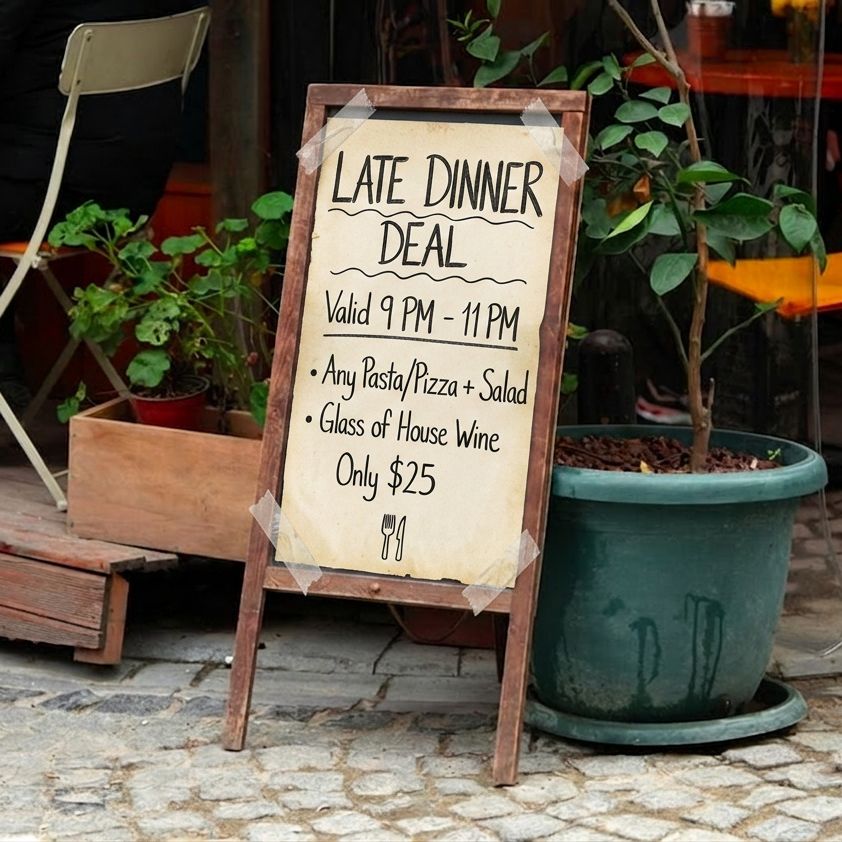
Anyone walking past your shop is a potential customer — provided you can catch their attention first. In this task, a faded paper poster or handwritten offer sign is no match for digital technology.

Moving image always wins

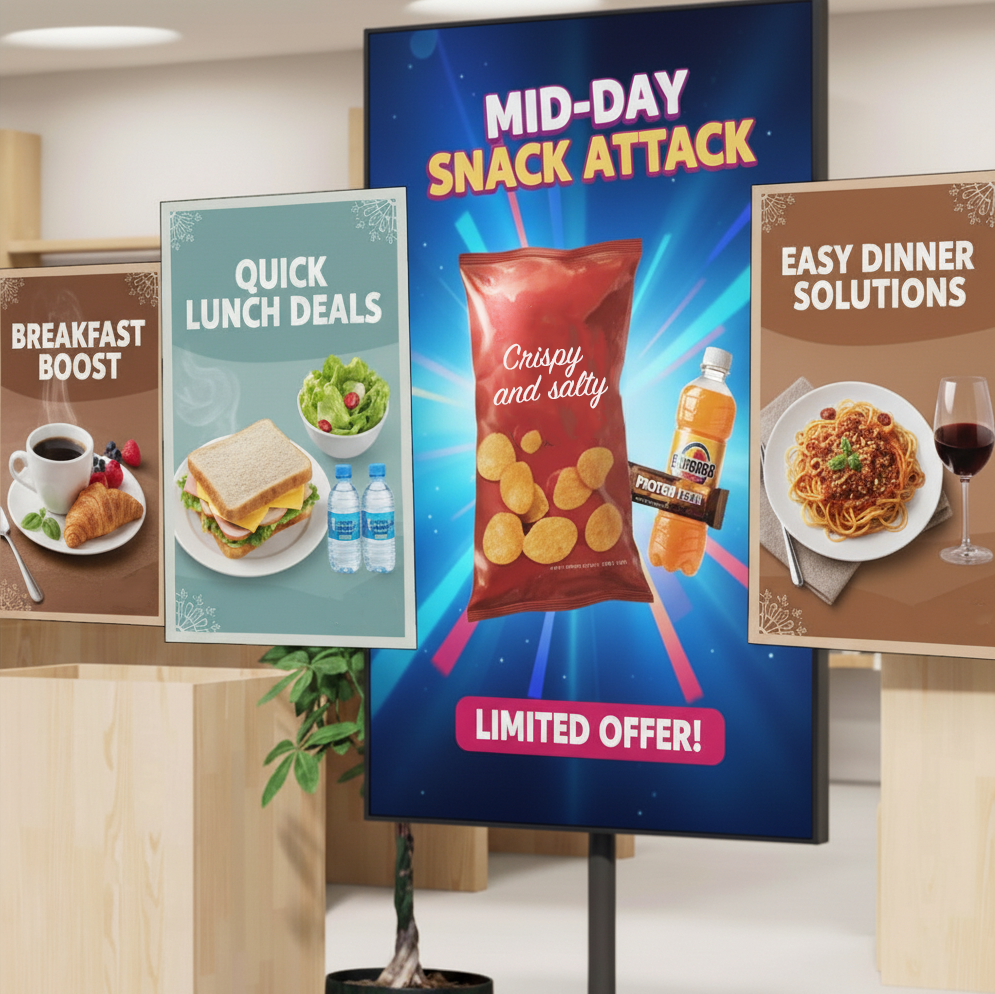
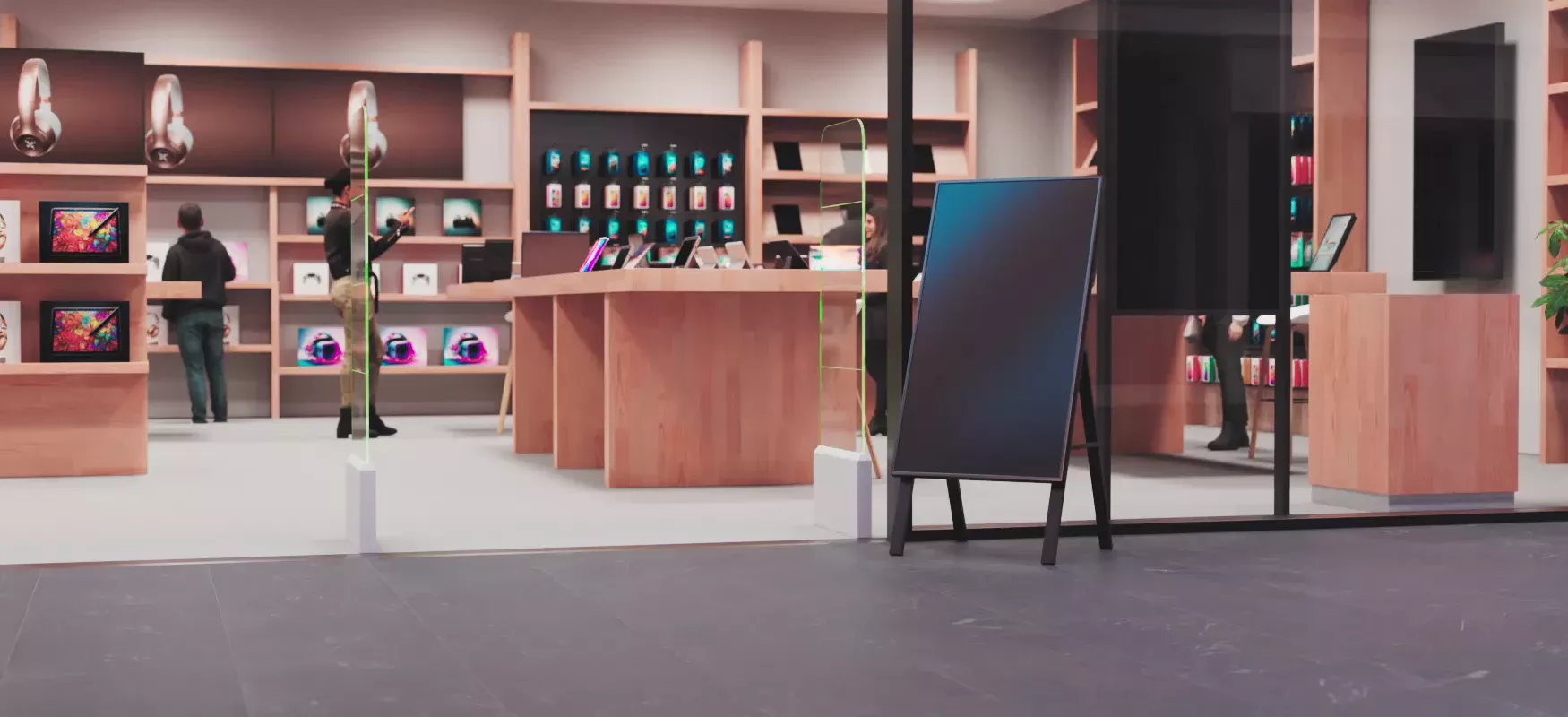
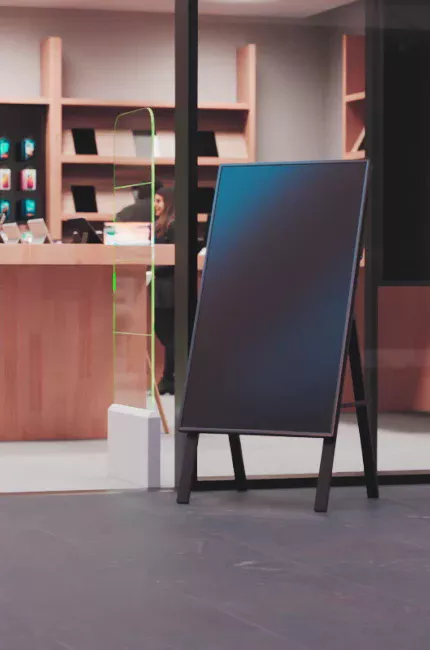
A digital A-board or a bright window display transforms a shop front into a dynamic advertising space. Moving images and high contrast attract a passer-by’s attention many times more effectively than static material, even in direct sunlight.

The right message at the right time

The greatest strength of digital signage, however, is its schedulability. In the morning, the screen can feature breakfast products and freshly brewed coffee; at lunchtime, the day’s ready-to-go offers; and in the evening, the weekend’s promotions. The message adapts automatically to the time of day, the weather, and the target audience.

Stage 2: Navigation and product discovery – in-store screens nurture the buying decision

Customers need guidance inside the store too

Once a customer has stepped through the door, the challenge is to keep them there and move them forward along the purchase journey. If there is a wide range of products but the signage is poor, the shopping trip can quickly end in frustration.

Indoor displays act as digital assistants

Strategically placed screens serve as the store’s digital assistants and the sales team’s silent helpers. They showcase new arrivals, share seasonal inspiration, and direct customers to the right departments, freeing up staff from routine guidance so they can focus on more demanding sales conversations and the moments where personal contact truly makes the difference.

sensorbeacon® – smart technology brings information within reach

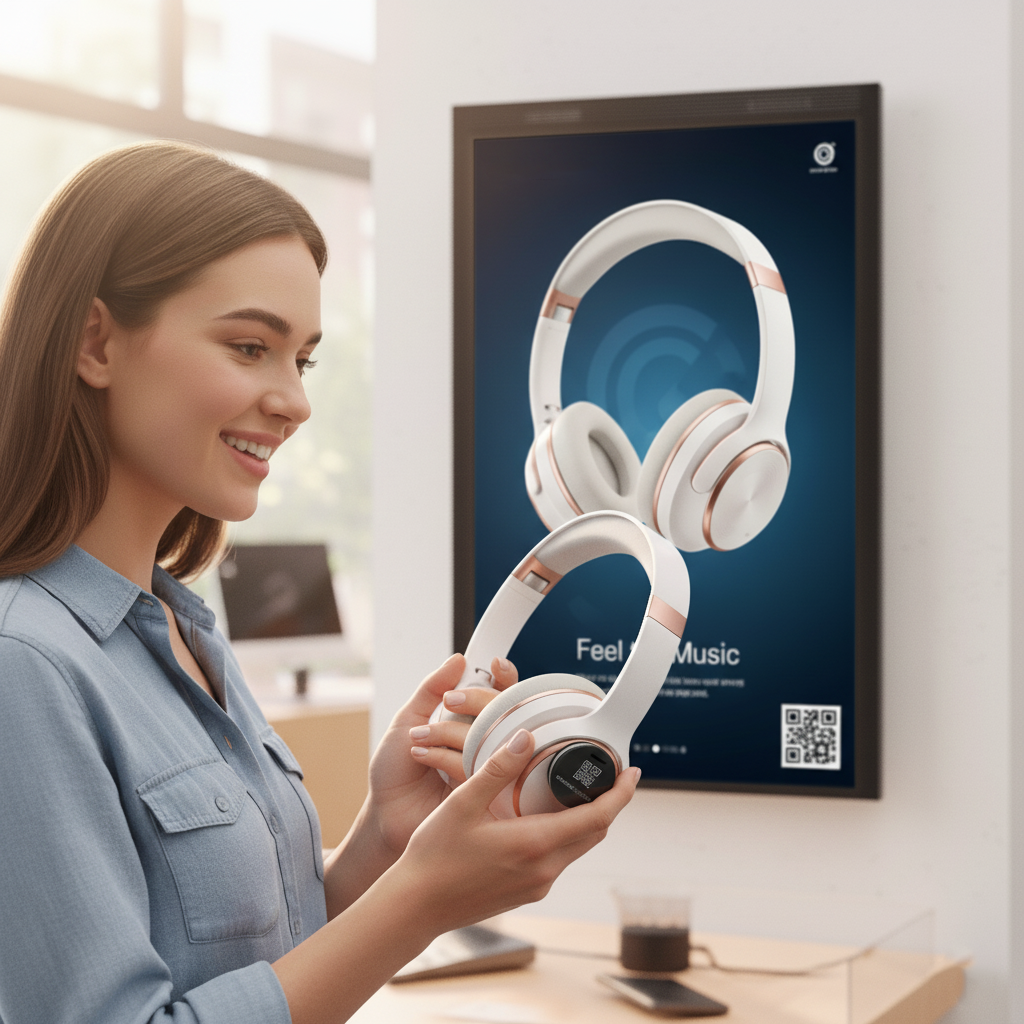
sensorbeacon® technology takes this a step further. It is a contextual solution: when a customer picks up a product — say, a pair of running shoes or a DSLR camera — from the display, the nearest screen responds immediately. It can show detailed technical specifications, usage tips, or customer reviews. The right information is available precisely when the buying decision is being weighed.

Stage 3: Reassurance – electronic shelf labels (ESL) build trust

Price uncertainty breaks the customer journey

One of the most common reasons a customer journey stalls is price uncertainty. If labels are missing, misplaced, or inconsistent with promotional material, trust in the store is quickly undermined, and the customer may head online instead.

Electronic shelf labels keep prices accurate at all times

Electronic Shelf Labels (ESL) solve this problem once and for all. Prices update automatically, directly from the point-of-sale system, eliminating human error and the time-consuming task of manually changing labels.

Flash sales and additional information via QR code

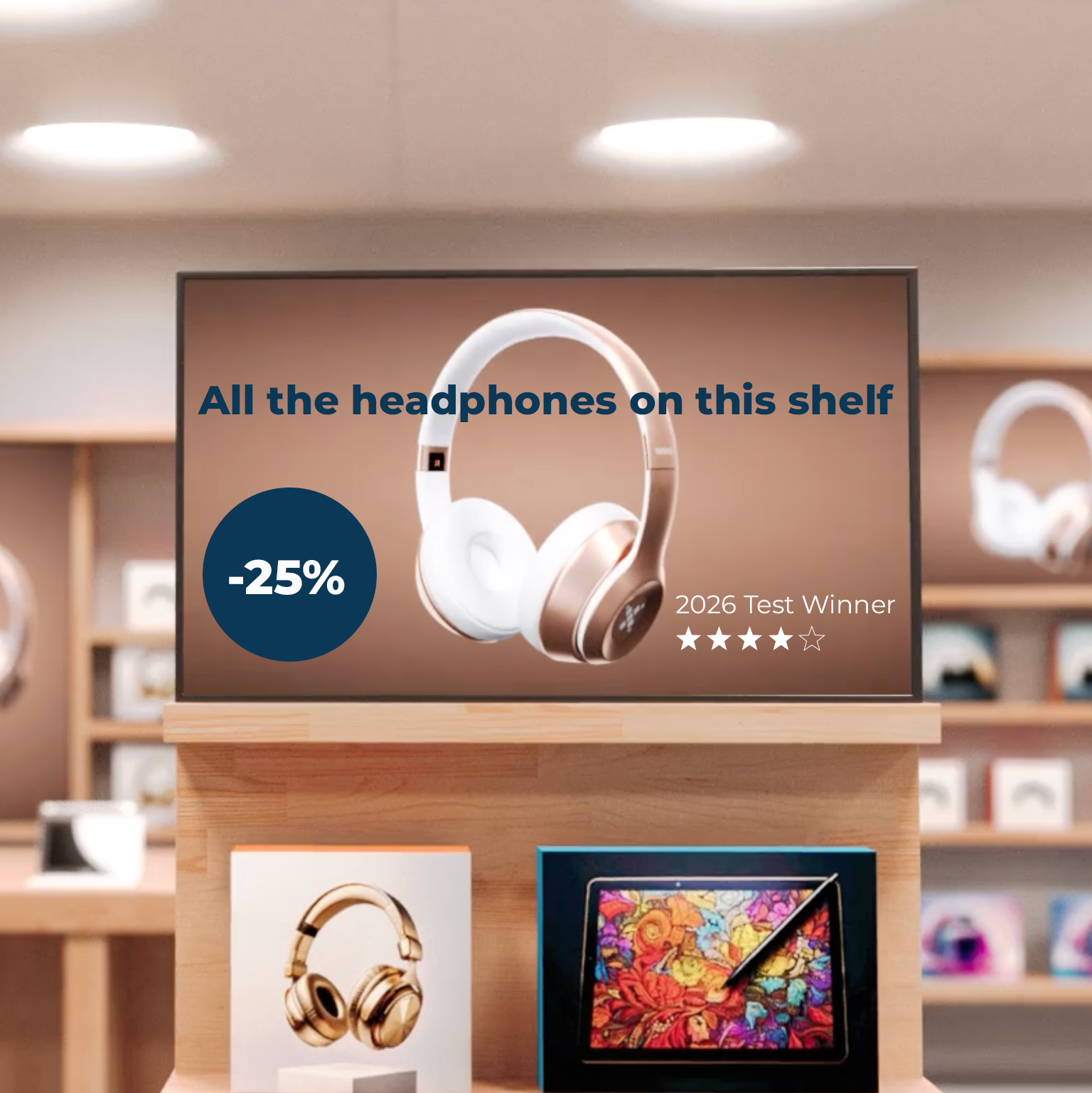
Beyond automation, ESL opens up new marketing possibilities. They enable dynamic pricing and rapid flash promotions. For example, a special offer lasting just one hour. A QR code embedded in the label also provides customers with a direct link to additional product information or instructions on their smartphones.

Stage 3: Reassurance – electronic shelf labels (ESL) build trust

Price uncertainty breaks the customer journey

One of the most common reasons a customer journey stalls is price uncertainty. If labels are missing, misplaced, or inconsistent with promotional material, trust in the store is quickly undermined, and the customer may head online instead.

Electronic shelf labels keep prices accurate at all times

Electronic Shelf Labels (ESL) solve this problem once and for all. Prices update automatically, directly from the point-of-sale system, eliminating human error and the time-consuming task of manually changing labels.

Flash sales and additional information via QR code

Beyond automation, ESL opens up new marketing possibilities. They enable dynamic pricing and rapid flash promotions. For example, a special offer lasting just one hour. A QR code embedded in the label also provides customers with a direct link to additional product information or instructions on their smartphones.

Stage 4: The decision point – till-area displays maximise upselling

The checkout queue is an underrated sales space

A customer standing in the checkout queue has already decided to buy. They are waiting without any particular activity, and for that very reason, they are unusually receptive to new ideas. The checkout queue is therefore one of the most valuable, and most underused sales spaces in any shop.

Waiting time becomes selling time

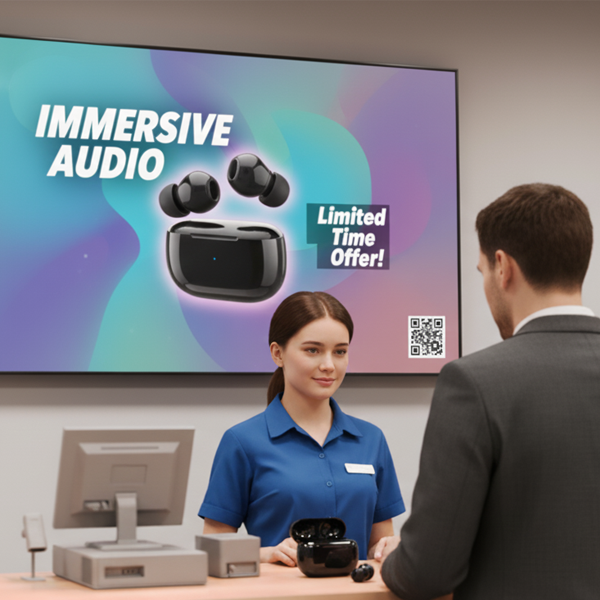
Displays positioned behind the till transform passive waiting into active selling time. They can show complementary products, promotions, or seasonal offers — content that supports upselling and encourages customers to add one more item to their basket.

The last touchpoint before they leave


The tabletop advertising display is also the final opportunity to reinforce the customer’s buying decision and leave a positive impression. Well-crafted content does not feel pushy — it feels like good service.

Summary: a modern in-store customer journey turns footfall into revenue