Impulse purchases happen in a moment, and in that moment, video is the most powerful influence there is. Movement, light, and sound stop the customer, stir an emotion, and provide an immediate reason to pick up a product. When the store environment and digital content support one another, an impulse turns into a purchase.
The psychology of impulse purchases
Impulse purchases are emotion-driven decisions
An impulse purchase is part of natural human behaviour. According to NielsenIQ research, as many as 60% of purchasing decisions are made on the spur of the moment, and they are influenced in particular by emotions, the environment, and stimuli that activate the reward system.
Video makes the moment of purchase even more powerful
In a store, this means that a customer’s attention is captured above all by the product that looks and feels interesting at that precise moment. Video can create this moment more effectively than any other means: movement guides the eye, and the message can change dynamically according to the situation.
The psychology of impulse purchases
Impulse purchases are emotion-driven decisions
An impulse purchase is part of natural human behaviour. According to NielsenIQ research, as many as 60% of purchasing decisions are made on the spur of the moment, and they are influenced in particular by emotions, the environment, and stimuli that activate the reward system.
Video makes the moment of purchase even more powerful
In a store, this means that a customer’s attention is captured above all by the product that looks and feels interesting at that precise moment. Video can create this moment more effectively than any other means: movement guides the eye, and the message can change dynamically according to the situation.
The role of video in conveying product information
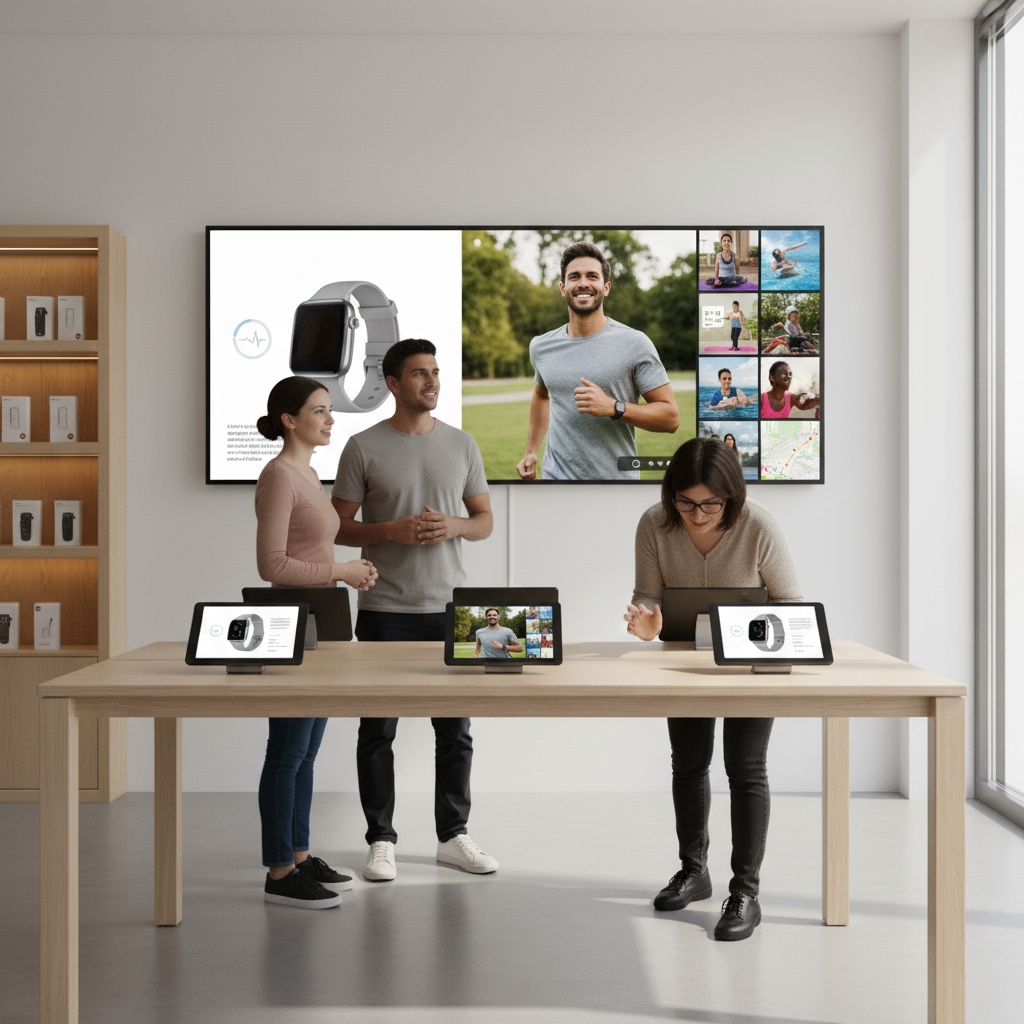
Video is not merely a visual advertisement — it is a fast conveyor of information. It can show how a product works, what it looks like in use, or why it suits a particular situation. A short, well-paced video can communicate more in the same amount of time than a static image and text combined.
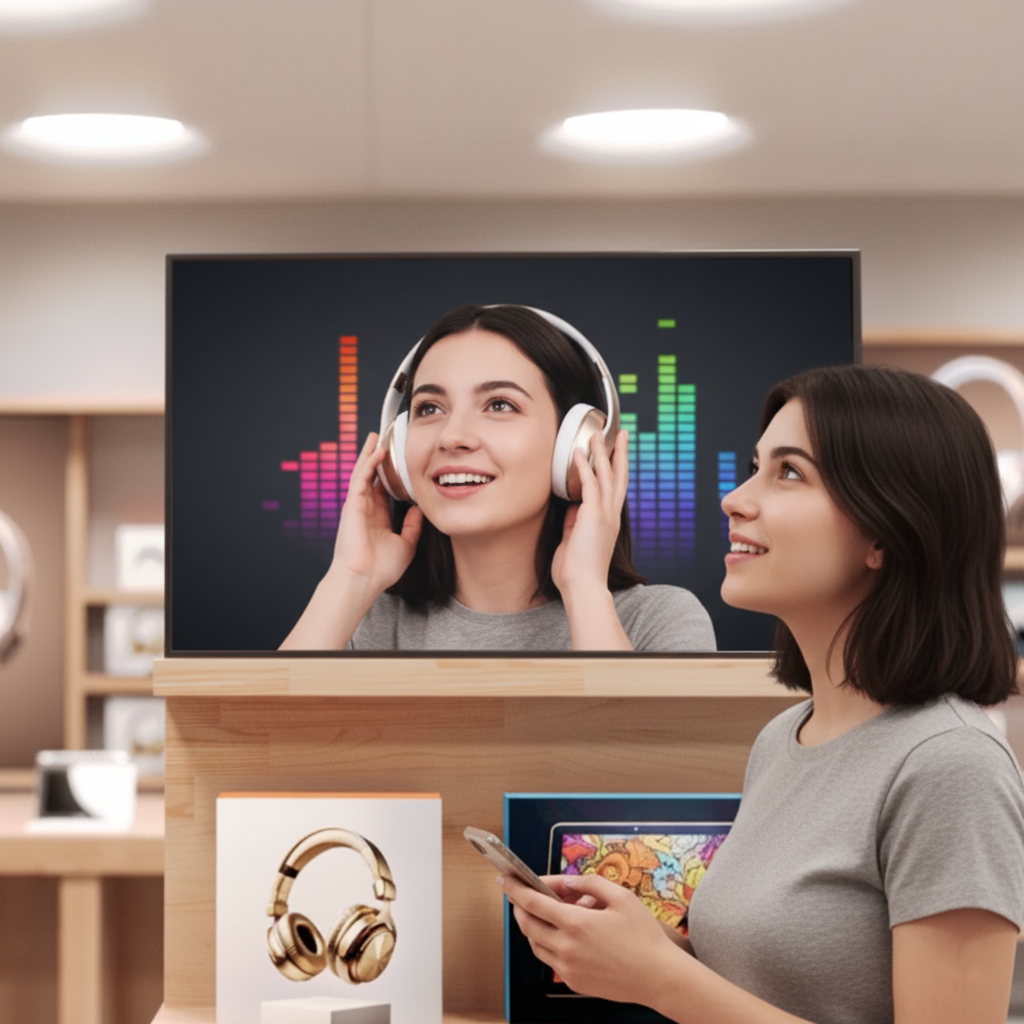
At the same time, video stirs emotions and builds an image of the product as part of the customer’s own life — what it feels like to run in new trainers along an autumnal forest path, how the steam rising from a coffee cup brings to mind last summer’s holiday and a wonderful hotel breakfast. Moments like these activate the desire to buy even before a conscious decision is made.

When played on digital signage displays, video lives in the rhythm of the store — it can change according to the time of day, customer flow, or campaign. In this way, content stays fresh and responds to the customer’s immediate need.
So how can video content be brought effectively into the store and other channels?
The benefits of video for increasing impulse purchases are beyond doubt — but how are these videos produced quickly, cost-effectively, and on-brand for every channel?
Automated video production saves time and effort
Traditionally, video production has been slow and expensive, but automation has changed everything. storefy’s adbot makes it possible to produce videos automatically for different channels — online shops, social media, and in-store displays — without manual editing.
Real-time videos keep marketing always up to date
From a single piece of content, numerous versions can be created in different formats, and the system ensures that the visual look remains on-brand across all videos. When prices, product images, or campaign details are updated, new videos are produced within minutes. This not only saves time and money, but also enables continuous, real-time responses to customer behaviour.
So how can video content be brought effectively into the store and other channels?
The benefits of video for increasing impulse purchases are beyond doubt — but how are these videos produced quickly, cost-effectively, and on-brand for every channel?
Automated video production saves time and effort
Traditionally, video production has been slow and expensive, but automation has changed everything. storefy’s adbot makes it possible to produce videos automatically for different channels — online shops, social media, and in-store displays — without manual editing.
Real-time videos keep marketing always up to date
From a single piece of content, numerous versions can be created in different formats, and the system ensures that the visual look remains on-brand across all videos. When prices, product images, or campaign details are updated, new videos are produced within minutes. This not only saves time and money, but also enables continuous, real-time responses to customer behaviour.
Making use of “handling data”
New technologies make it possible to track customers’ interaction with products in stores more precisely than ever before. sensorbeacon® solutions, for example, provide concrete information on which products customers touch or handle, and when. Digital displays, meanwhile, offer insight into which videos or messages generate interest and best guide customer behaviour.
When handling data is combined with video playback data, it becomes possible to measure which content truly drives action. It may be noticed, for example, that a particular video clip increases by 20% the number of customers who pick up a product for a closer look, or that a video works best at a specific end-of-aisle position. Using these results, content can be continuously optimised. What works stays, and what doesn’t gets replaced with the next version.
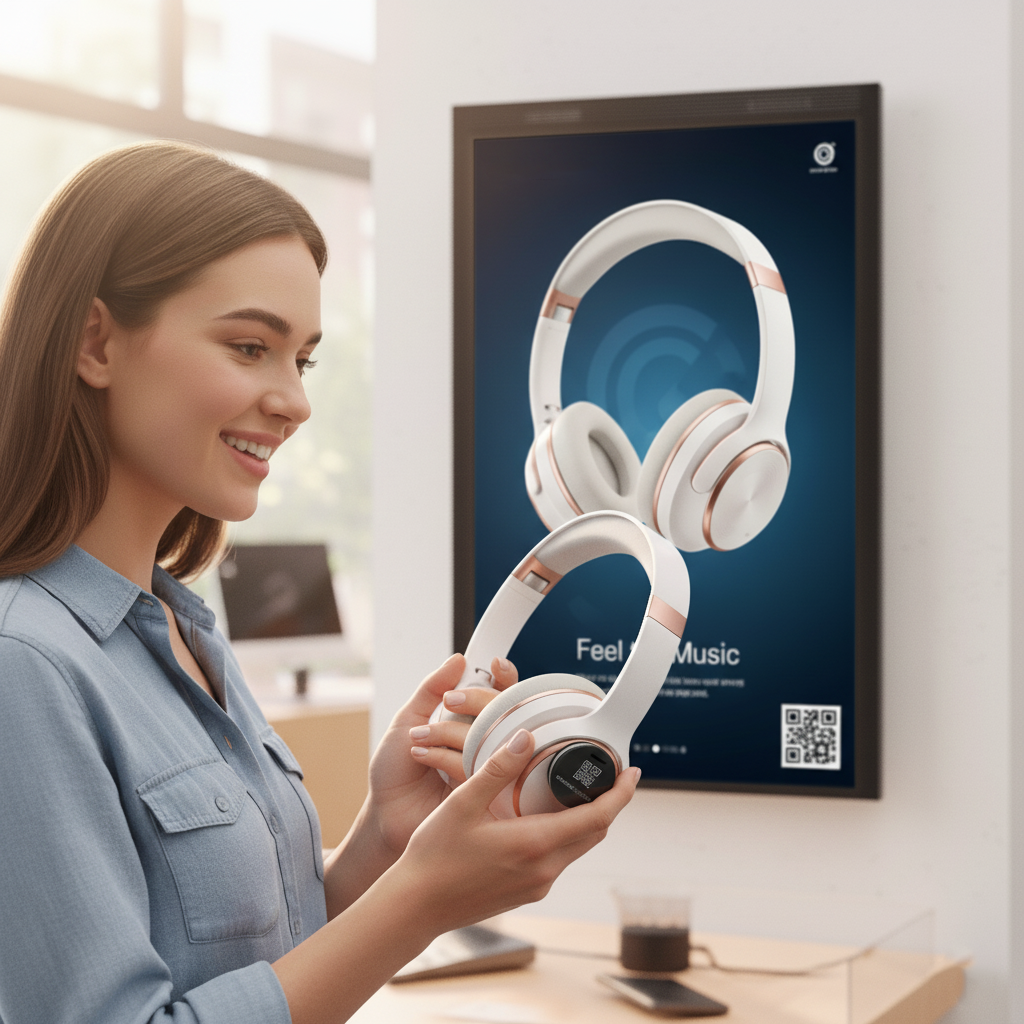
Practical tips and examples

-
Harness the power of movement
Use movement in the video that draws the eye towards the product — for example, the product rotating, being opened, or shown in use.
-
Keep the message simple
Impulse purchases happen in seconds, so videos should be short and clear.
-
Adapt content to the situation
Change messages according to, for example, the weather, the day of the week, or how busy the store is.
-
Test and monitor data
Run A/B tests with different videos and track how they affect product sales and customer flow.
-
Combine automation and creativity
When technical production is automated, creative work can focus on how the video moves and surprises the viewer.

The power of video lies in its ability to combine emotion and information — it makes the customer stop, become interested, and ultimately buy. When automation and analytics are brought into the process, every moment of impulse purchase potential can be made even more likely.
Find out more about automated video production and in-store marketing solutions at
Kauppiaskatu 5, 1st floor, 20100, Turku
Customer service | info@storefy.fi | +358 2 4802 7660 | Open on weekdays 9–17
storefy is a registered trademark of doop oy
sensorbeacon is a registered trademark of doop oy