The in-store experience doesn’t come about by chance. It is built from the environment, communications, and the customer’s sense of feeling noticed. How can all of this be measured — and above all, put to use? Digital signage and analytics offer new, concrete ways to do exactly that.

Why is it worth measuring the in-store experience?
A good in-store experience is a powerful competitive advantage that has a direct impact on purchasing decisions. Customers spend more time in an environment they enjoy, and are also more likely to return. It is therefore worth investing in the design of the in-store experience — the comfort of the space, communications, and attention to the customer.
Once a good in-store experience has been created, its effects can be enhanced through measurement. Measurement makes visible things that were previously assessed largely on instinct: how campaigns are noticed, where the customer pauses, and which messages truly have an impact. Data used in decision-making enables the continuous development of marketing and the store’s appearance — not just on a campaign-by-campaign basis. At the same time, the store’s design team gains a well-founded view of how the brand performs in a physical retail environment compared to online.
What can be measured?
Data reveals how customers actually behave
Modern stores are already making use of wide-ranging analytics. Measurements can cover customer flows, time spent in different areas of the store, and the number of views on digital displays. Customer reactions and movement patterns also reveal a great deal about how messages are being received.
Analytics makes marketing measurable and results-driven
When these figures are combined with sales data, it becomes clear what kinds of content or campaigns are actually driving purchasing decisions. It may be found, for example, that a product video played at a certain time increases sales only on a specific day of the week or at a particular time of day. In this way, marketing is no longer merely about visibility, but about measurable results.
What can be measured?
Data reveals how customers actually behave
Modern stores are already making use of wide-ranging analytics. Measurements can cover customer flows, time spent in different areas of the store, and the number of views on digital displays. Customer reactions and movement patterns also reveal a great deal about how messages are being received.
Analytics makes marketing measurable and results-driven
When these figures are combined with sales data, it becomes clear what kinds of content or campaigns are actually driving purchasing decisions. It may be found, for example, that a product video played at a certain time increases sales only on a specific day of the week or at a particular time of day. In this way, marketing is no longer merely about visibility, but about measurable results.
Digital signage as part of measuring the customer experience
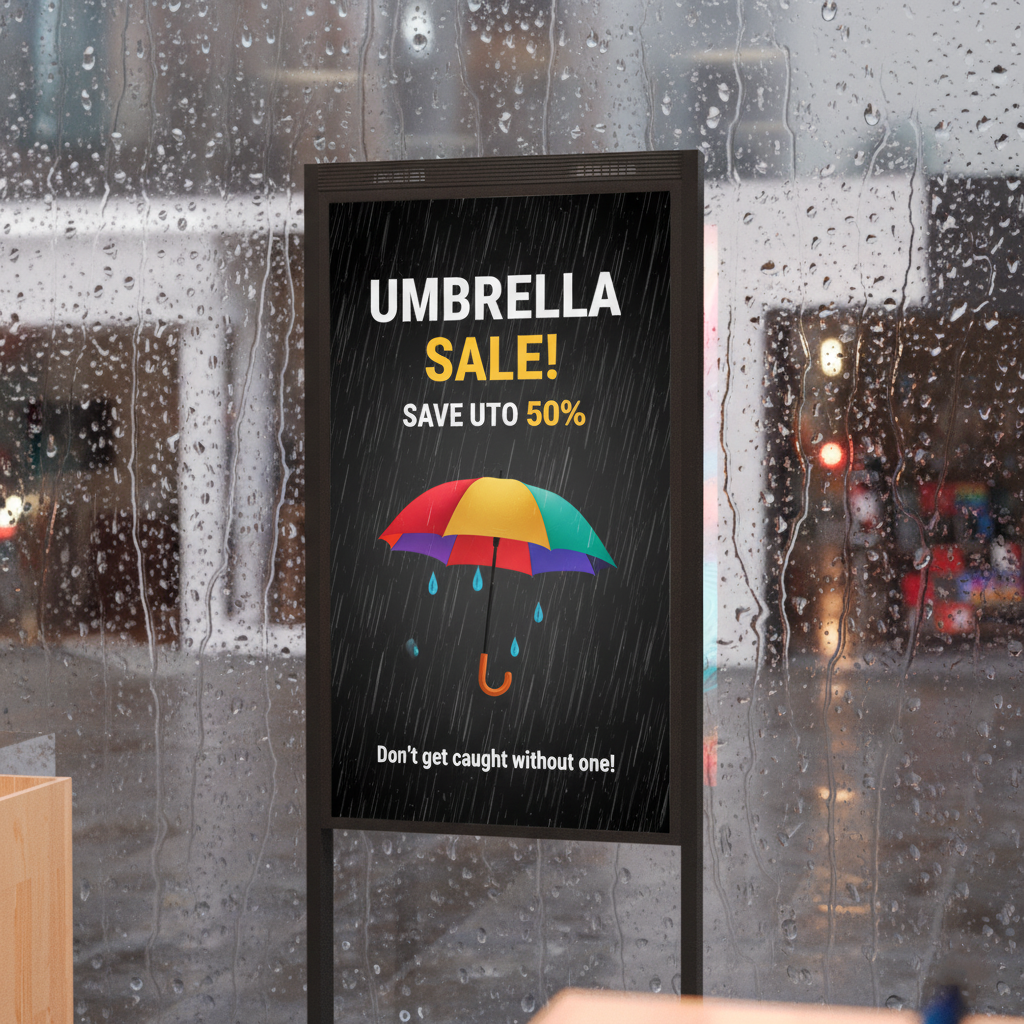
storefy’s digital signage system offers an effective way to understand how customers experience the store and its communications. Smart displays, along with sensors or cameras connected to them, produce anonymous data on customers’ movements, the points where they stop, and their interactions with different content. The system can also make use of external data sources, such as weather information or current events, and adapt content accordingly to serve the customer experience best.
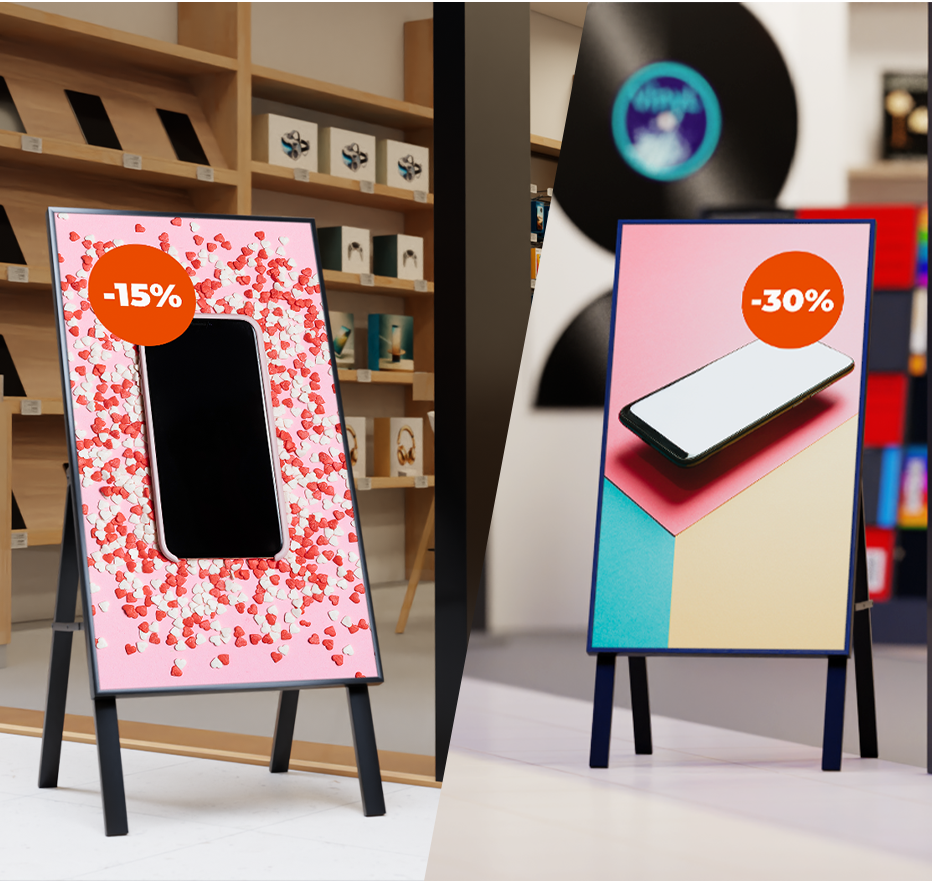
Content can be tested and optimised through A/B tests: comparing, for example, which messages or visual elements cause customers to stop, try a product, or spend more time in the store. Results are automatically compiled into reports that can be used both in planning new campaigns and in developing the overall store environment. In this way, the store becomes a dynamic environment that responds to customer behaviour — not just to marketing offers.
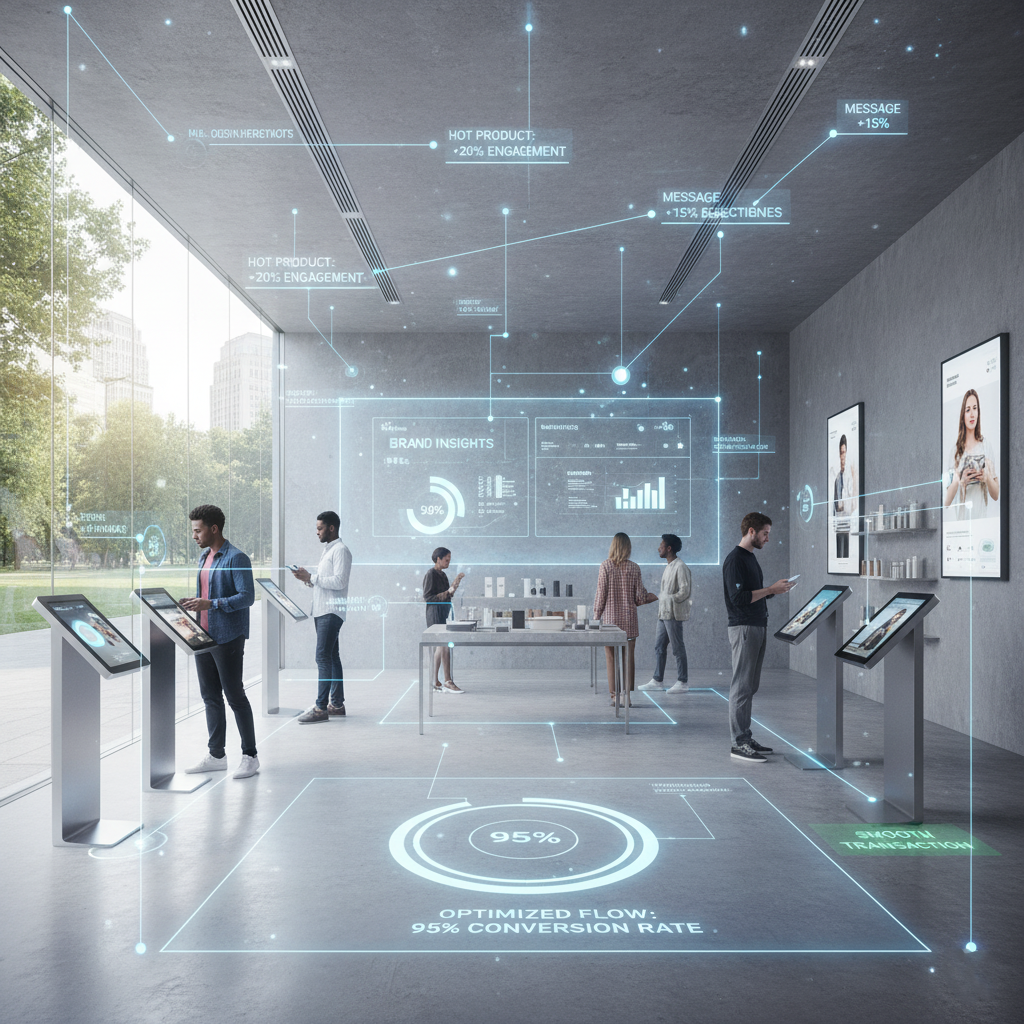
Analytics can be used to develop the customer journey, product placement, and the timing of messages so that the customer’s experience is as smooth and enjoyable as possible. Over the long term, measurement creates learning and consistency: the store evolves in line with customers’ needs, and the brand is able to speak ever more precisely to its own audience.
5 things to remember from this article

-
The in-store experience is a competitive advantage
Designing a good in-store experience is a strategic competitive advantage.
-
Measurement brings clarity to decisions
The in-store experience can be measured, which brings clarity to decision-making.
-
Analytics reveals customer behaviour
Digital signage and analytics provide the tools to understand customer behaviour and interaction.
-
Testing continuously develops the experience
A/B tests and ongoing analytics help develop the in-store experience systematically.
-
Data makes a store genuinely customer-centric
Measurement creates learning and consistency, allowing the store to respond to customers’ needs ever more effectively.

Kauppiaskatu 5, 1st floor, 20100, Turku
Customer service | info@storefy.fi | +358 2 4802 7660 | Open on weekdays 9–17
storefy is a registered trademark of doop oy
sensorbeacon is a registered trademark of doop oy