15.8.2025

The history of digital signage – how technology, users, and context shaped communication

Digital signage, the use of digital displays for communication and advertising, has seen explosive growth over the past couple of decades. In the early 90s, a digital screen was a rare curiosity, but today its various forms are a daily reality in both retail and public spaces. How did we get here, and where are we headed?

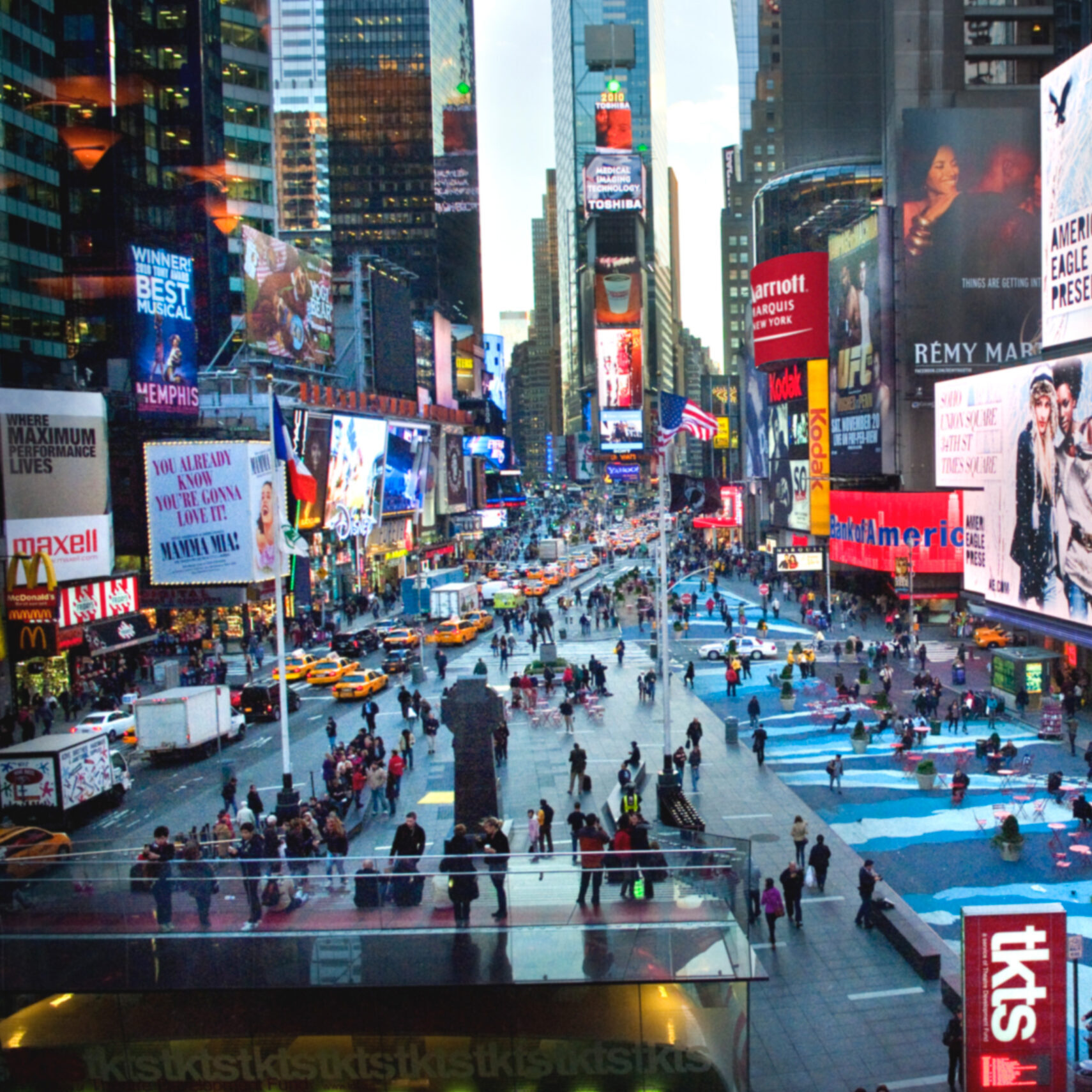
1970–1990: TV screens and video walls

The first steps toward digital display communication were taken as early as the 70s and 80s, when video walls and television screens began to be used to support in-store advertising. Advertisements and product demonstrations were often played from VHS tapes, and although the technology was clunky, it offered a completely new kind of appeal compared to static posters. Changing content was manual and laborious, but the idea of visual communication at the point of purchase had already been born.

1990–2000: New possibilities – and new challenges

In the late 1990s, the first computer-based playback systems emerged, and flat screens began to replace cathode-ray tube (CRT) televisions. Content could also be managed and changed more easily. Displays could feature animated PowerPoint presentations, QuickTime videos, or even interactive Flash-based content. However, the problem was the fragmentation of systems: every solution was locally customised, and common formats or management tools did not yet exist. At this stage, digital signage was still largely the playground of large operators and specialised events.

2000–2010: Standards, scalability, and commercialisation

After the turn of the millennium, the development of LCD technology and falling prices enabled the wider use of displays. Screens became thinner, brighter, and, above all, cheaper. At the same time, media players and content management software (CMS) evolved, allowing multiple displays to be managed centrally. This was a decisive moment: digital signage moved from individual specialised solutions toward scalable communication that could be used in retail chains, public transport, and restaurants.

The use of displays was no longer limited to video advertising – increasingly, they displayed rotating offers, menus, signage, and event information. Content was typically scheduled and designed to remain on the screen for days or weeks at a time.

2010–2020: Smarter content and more versatile integrations

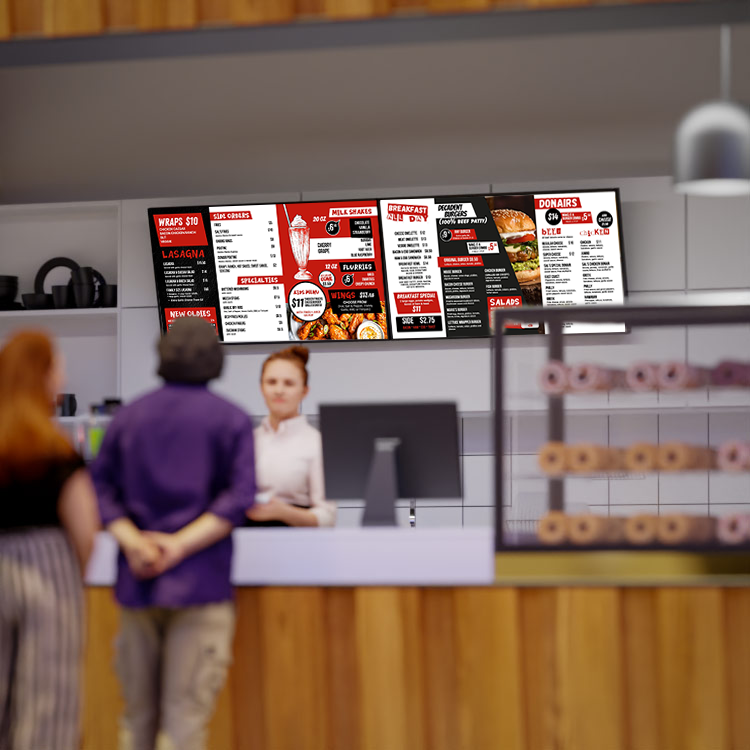
In the mid-2010s, digital signage transformed again: displays began to feature built-in media players, and cloud services became more common, making content scheduling easier. Consequently, content became more adaptable to different situations and needs. Content began to be scheduled by time of day, day of the week, or customer profiles. Advanced systems made it possible, for example, for breakfast menus to appear in the morning and lunch options in the afternoon – automatically.

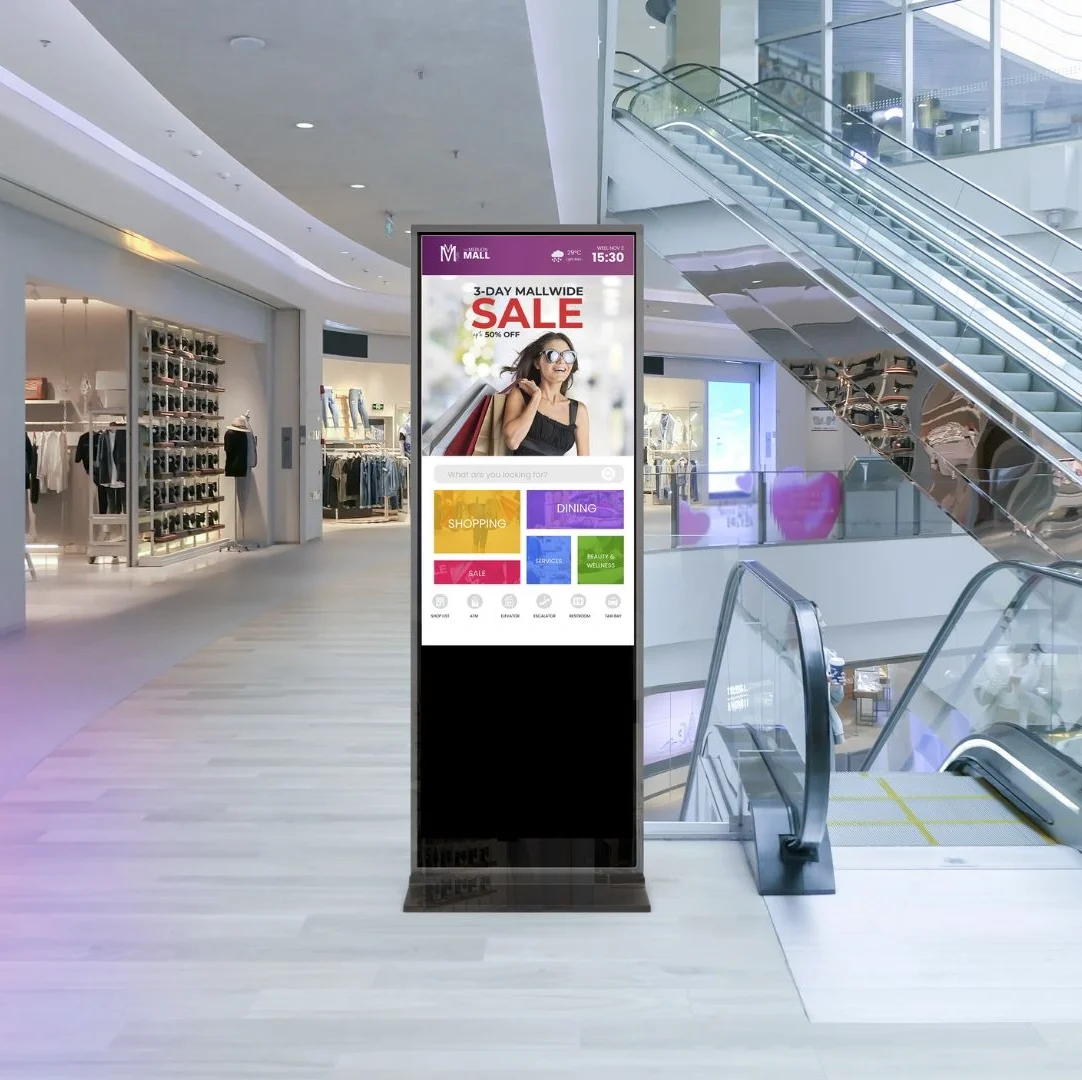
At the same time, integration with other systems began. Inventory levels, weather data, and campaign interfaces could be connected to digital displays, allowing content to update as needed. Interactivity also increased through touchscreens and mobile connectivity.

Read also: More effective marketing with Digital Signage

The 2020s: AI, automation, and real-time data

In the 2020s, digital signage is much more than an “electronic poster”. Today, displays can utilise real-time data and even artificial intelligence (AI) for content personalisation and scheduling. For example, information gathered from the weather, events, or social media feeds can be used to select content.

Advertising displays can also adapt to the viewer: age range, gender, time of day, and shopping behaviour can all influence what content appears on the screen. Display communication no longer competes with printed advertisements; it has found its own place as part of a larger, intelligent communication ecosystem.

Read also: A new kind of advertising stand – more sales with less effort

Digital communication expands beyond retail

While digital signage is often associated with retail, its areas of use are much broader. Museums, hospitals, schools, and transport hubs use digital displays for guidance, education, and safety information. Especially in crisis communication, digital signage offers fast, centralised, and attention-grabbing messaging – precisely when it matters most.

What does the future look like?

The development is not stopping. New display technologies, such as electronic paper and low-energy solutions, are constantly being developed. Solar-powered or wirelessly updated display solutions could enable digital communication to expand into locations where network connections or power supply are limited.

Another future area is content creation: generative AI can produce text-based or even visual content directly for the screen without a manual intermediary. Additionally, augmented reality (AR) and virtual reality (VR) interfaces may offer new types of user experiences – at least in certain environments.

Digital signage is here to stay – but the change is not over

Digital signage is not a finished technology but a constantly evolving part of communication, marketing, and the service experience. Whereas in the early 1990s there was debate about whether to put up screens at all, today the question is the opposite: how can digital displays be utilised as smartly, effectively, and customer-orientedly as possible?