User-generated content (UGC) is the gold nugget of marketing. It is authentic, credible, and has a direct impact on purchasing decisions. It is no coincidence that UGC has become one of the most important forces in marketing in recent years — across digital channels and, increasingly, in physical stores too.
The numbers speak for themselves
- According to Nielsen research, 92 % of consumers trust recommendations from other customers more than brands’ own advertising.
- According to a Stackla study, 79 % say UGC has a significant influence on their purchasing decisions.
- Research conducted in the United States has found that UGC’s engagement rate can be as much as 6–7 times higher than that of brand-produced content.
These figures demonstrate that UGC is no longer merely a seasoning added to a marketing strategy, but a central factor at every stage of the customer journey. The question is: why leave this potential to be exploited only by online shops and social media channels, when it can be brought directly to where purchases actually happen — the physical store?

Why is user-generated content so effective in a store?
Traditional in-store marketing typically relies on campaign messaging, price promises, and tactical offers. These certainly work, but their impact is limited. User-generated content, on the other hand, offers something no advertising agency can fully replicate: authenticity.
Trust is built from person to person. When a customer sees another consumer’s review or a photo of a product in use on a display, it feels honest and convincing.
Social proof activates. Many people hesitate over a purchasing decision, but seeing recommendations from others lowers the threshold for trying a product.
Transparency builds brand value. Displaying UGC signals that the brand has nothing to hide. It dares to let its customers’ voices be heard.
Imagine a customer considering a new sports jacket. They are unsure whether it suits their needs. But when they see photos on a digital advertising display of other customers wearing the same jacket, accompanied by short comments such as “best purchase this winter — keeps you warm even in freezing temperatures,” uncertainty turns to confidence.
What kinds of content can be shown on displays?
The advantage of digital advertising displays is their dynamic nature: content can be changed, combined, and updated in real time. UGC makes these displays more lively and engaging.
Customer photos and videos
In a cosmetics shop, for example, photos of customers using the products can be shown. This makes the product more relatable and brings the brand into customers’ everyday lives.
Reviews and feedback
Short text-based comments — such as “the perfect coffee to start the morning” or “surprisingly durable running shoes” — work as quick recommendations.
Social media feeds
Selected posts can be pulled directly from Instagram or TikTok, for example. This adds a sense of currency and creates constantly refreshed content.
Customer stories and testimonials
Longer, narrative-style customer experiences can be presented in video or text form. These give the use of products a human dimension.
What kinds of content can be shown on displays?
The advantage of digital advertising displays is their dynamic nature: content can be changed, combined, and updated in real time. UGC makes these displays more lively and engaging.
Customer photos and videos
In a cosmetics shop, for example, photos of customers using the products can be shown. This makes the product more relatable and brings the brand into customers’ everyday lives.
Reviews and feedback
Short text-based comments — such as “the perfect coffee to start the morning” or “surprisingly durable running shoes” — work as quick recommendations.
Social media feeds
Selected posts can be pulled directly from Instagram or TikTok, for example. This adds a sense of currency and creates constantly refreshed content.
Customer stories and testimonials
Longer, narrative-style customer experiences can be presented in video or text form. These give the use of products a human dimension.
How do you get customers to participate?
Content doesn’t create itself — customers need to be encouraged to get involved. Digital advertising displays offer several practical ways to do this:
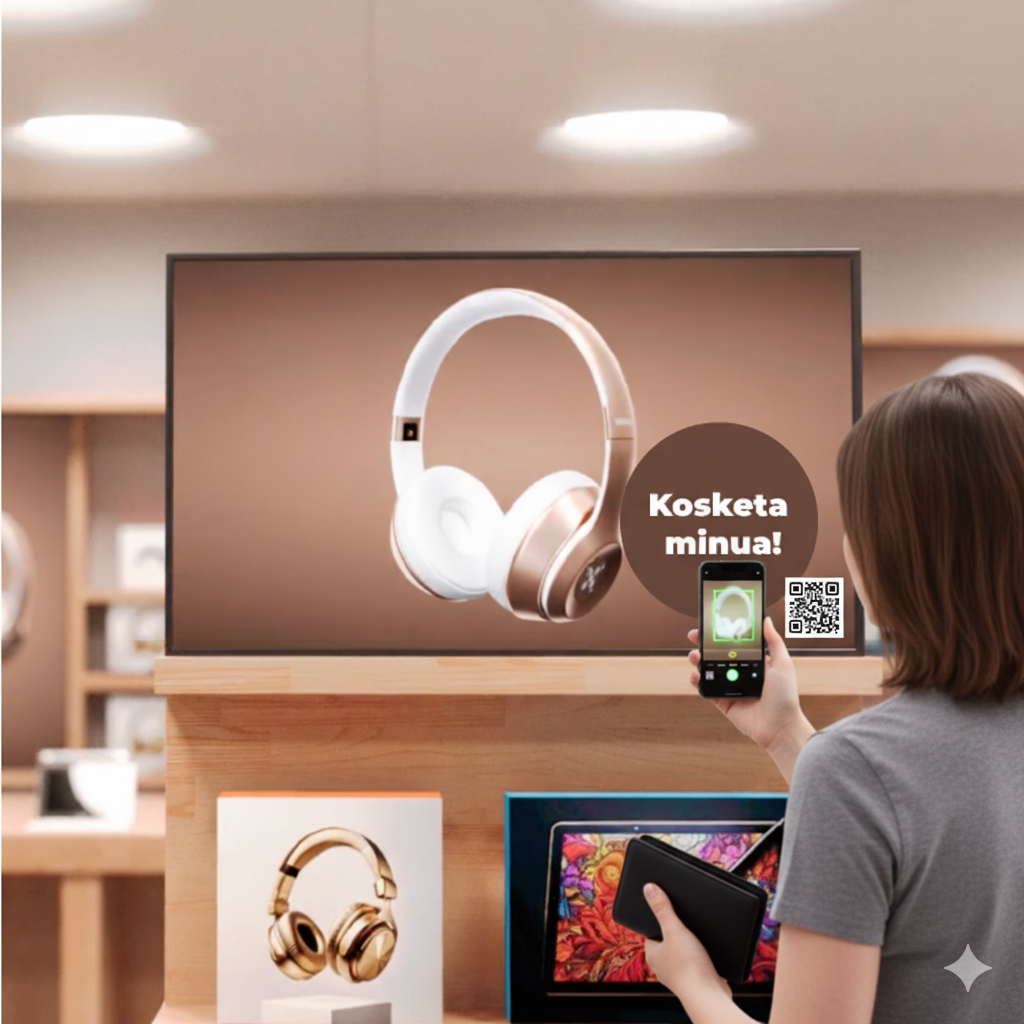
QR codes
A QR code added to a display allows customers to submit a photo, video, or piece of feedback directly. This makes participation easy and immediate.

Hashtag campaigns
A brand can create its own hashtag through which customers’ social media posts are surfaced on the displays. A fashion retailer, for instance, can highlight customers’ style photos featuring their own products.

Incentives
Participation can be encouraged by offering a small reward, such as a discount on the next purchase. This gives the customer a concrete reason to take part, and the brand gains valuable content.
UGC collection tools
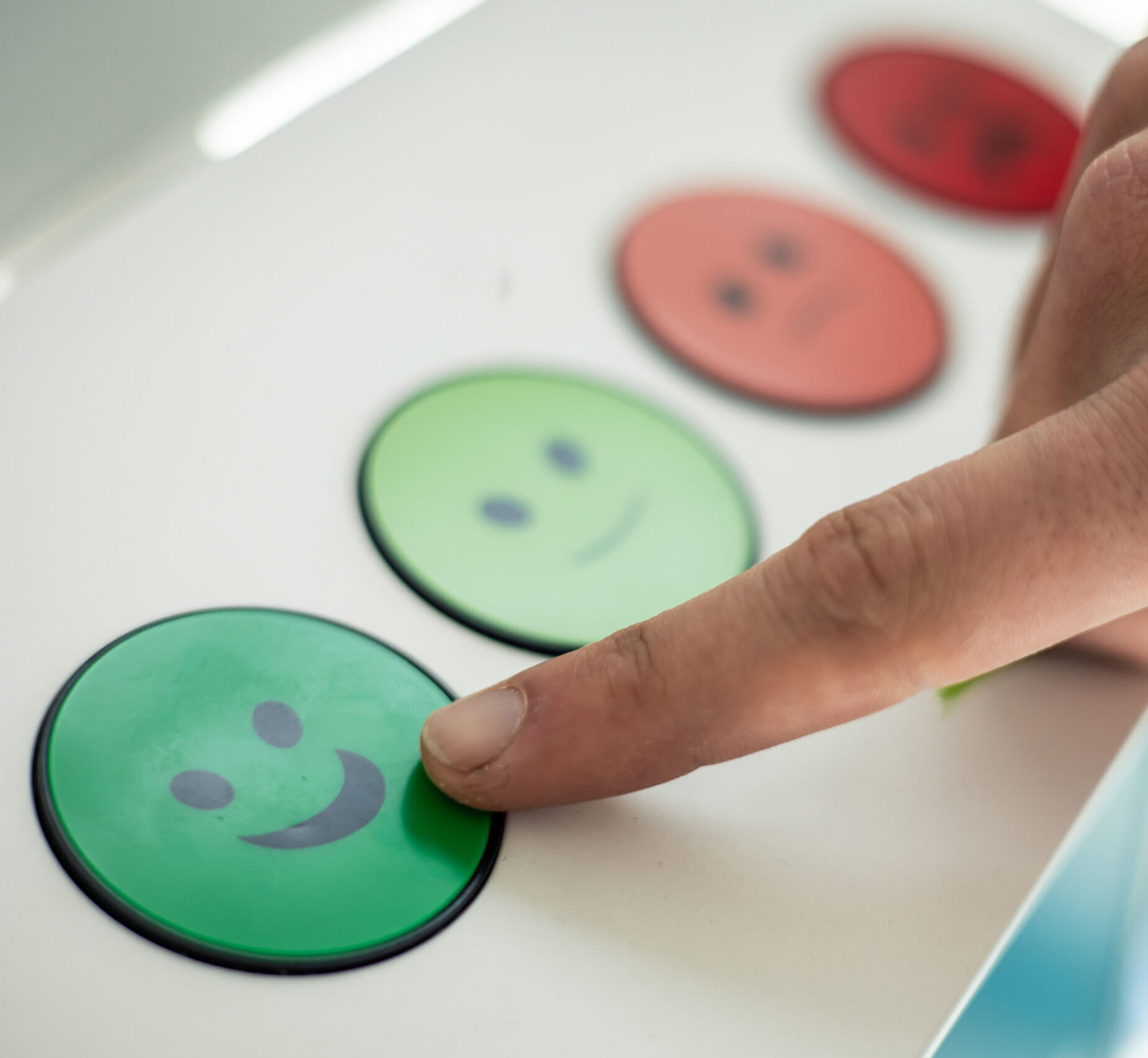
There are also dedicated tools on the market whose primary purpose is to collect user-generated content. Such features are often found as part of broader feedback management solutions, such as Net Promoter Score (NPS) tools.
The result is a metric that allows a company to monitor customer loyalty. When UGC features are integrated with NPS tools, valuable photos, experiences, and stories from the customers’ own perspective can be collected at the same time. In modern NPS tools, after submitting recommendations and feedback, users can record or upload a testimonial video, after which they may receive a discount code or other benefit.
Read also: Measuring marketing results in-store
How do you get started with using UGC on advertising displays?
Define your objectives
Is the aim to build trust, increase sales, or strengthen brand image?
Start small
Test with a single campaign or in one store before rolling out more widely.
Make use of existing content
Customer reviews in your online shop, social media photos of products, or content produced by micro-influencers offer ready-to-use material at low cost.
Measure the impact
Monitor customer feedback, engagement, changes in sales, and time spent in the store.
How do you get started with using UGC on advertising displays?
Define your objectives
Is the aim to build trust, increase sales, or strengthen brand image?
Start small
Test with a single campaign or in one store before rolling out more widely.
Make use of existing content
Customer reviews in your online shop, social media photos of products, or content produced by micro-influencers offer ready-to-use material at low cost.
Measure the impact
Monitor customer feedback, engagement, changes in sales, and time spent in the store.
To conclude
User-generated content is marketing’s most powerful form of social proof. Digital advertising displays offer the opportunity to bring this asset directly into the physical store, right to the point where purchasing decisions are made.
When a brand dares to let its customers’ voices be heard and uses their experiences in its marketing, it gains access to authentic, credible, and continually renewing content.
Digital displays make visible what would otherwise remain hidden — customers and their experiences. And therein lies the real competitive advantage.
Kauppiaskatu 5, 1st floor, 20100, Turku
Customer service | info@storefy.fi | +358 2 4802 7660 | Open on weekdays 9–17
storefy is a registered trademark of doop oy
sensorbeacon is a registered trademark of doop oy