4.9.2026

Top 6 common digital signage mistakes and how to fix them

Digital signage alone does not make communication effective. The location, content, audience and purpose of the display determine whether the message gets noticed,  and whether anything happens afterwards.

The screen is on the wall and showing content as it should. And yet, something is missing.

Customers do not stop to look. Sales do not seem to change. Creating content starts to feel like extra work, and no one really knows what should be shown on the screen.

Does that sound familiar?

The screen may not be the problem. Often, the real digital signage mistake lies somewhere else.

Even a good display cannot make a message interesting if it is in the wrong place. And even a great video will not help if the customer does not have time to understand it before walking past.


Here are six of the most common digital signage mistakes your company can make

1. The screen is in the wrong place 

Not all locations are equally effective.

If a display is tucked away in a corner where hardly anyone passes, its impact will inevitably be limited. The same applies if the display faces the wrong direction or something is constantly blocking the view.

Imagine a display at the entrance to a shop. A customer may walk past it in just a few seconds. A long product demonstration video may never be watched all the way through.

The situation is different near the checkout, where a customer may stand still for several minutes.

Read also: Retail customer journey: how digital technology turns passers-by into paying customers

How to fix it

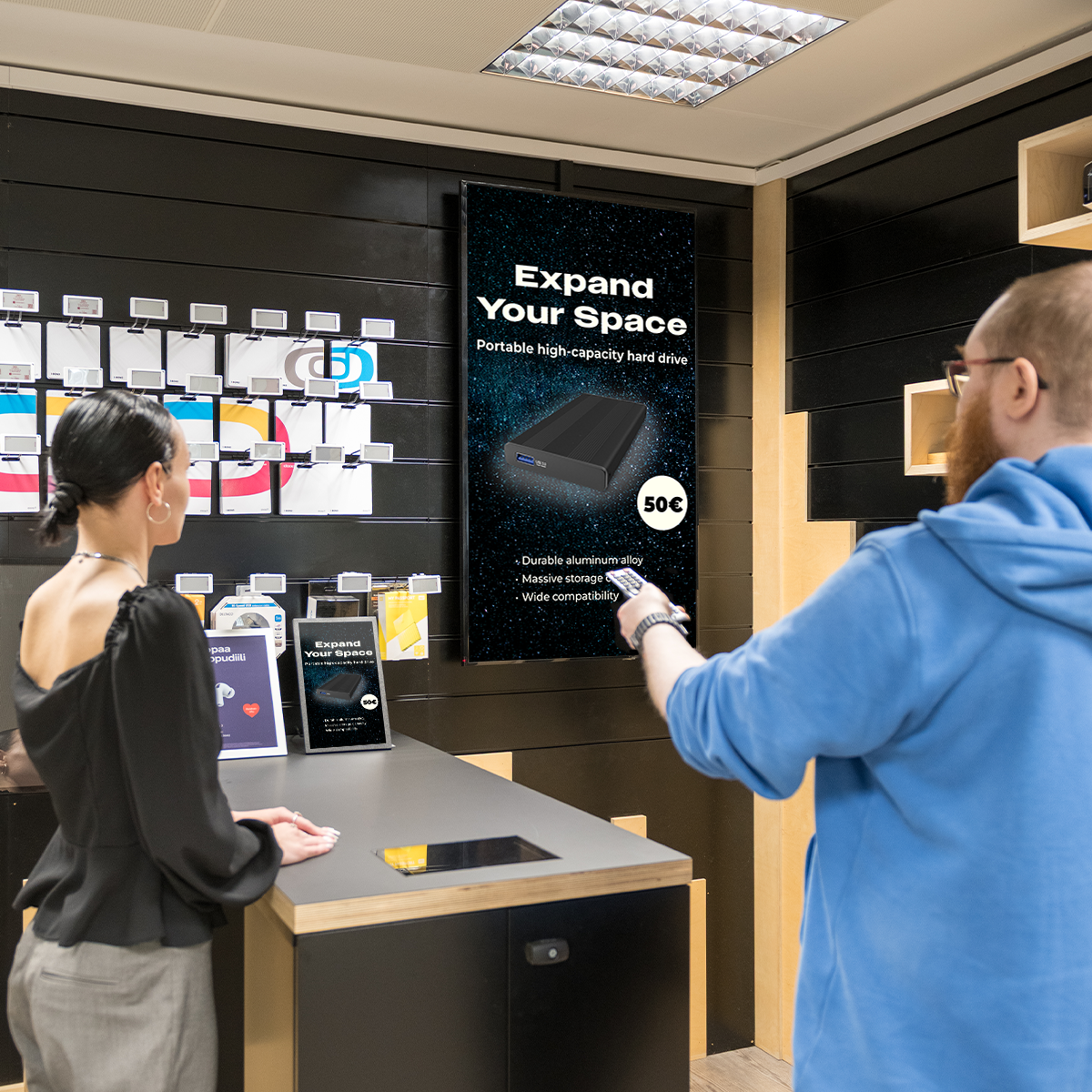
Start by considering what happens around the screen. Who sees it, for how long, and from which direction? A display at the entrance might encourage customers to come inside, while a screen next to a shelf might help them choose a product.

The location of the display should therefore be planned together with the content it will show.

2. The screen is overcrowded

If the screen says everything, the customer may not read anything.

Naturally, a business has a lot to say. Alongside the offer, you may want to include the product features, price, company logo, campaign dates, website and perhaps a few other details.

The result can easily look more like a brochure than an advert.

Digital signage content needs to work quickly. Customers have not come to the shop to read a report on a screen.

If, for example, you are advertising a new barbecue, one clear benefit and a good image may work better than six bullet points listing the product’s features.

How to fix it

Choose one main message for each piece of content. What do you want the customer to remember as they move on? If the answer is ‘actually, all of these things’, the content probably needs to be trimmed down a little more.

Read also: Digital signage content: 10 ideas for businesses

3. The message is not understood quickly enough

The screen may be in exactly the right place and the content may look great, yet the message can still be missed.

The digital signage mistake may be simple: the customer does not understand what you are trying to tell them within the first few seconds.

Imagine an offer playing on a restaurant screen. If the sequence starts with atmospheric footage of the restaurant, followed by the logo and only then the offer in small text, the customer may already have walked past before the important information appears.

How to fix it

Put the most important thing first. What are you selling? What makes it interesting? What should the customer do?

A screen is not the place to save the news until the final frame.

Read also: How do I convert from the shopping aisle? Note these three things!

4. The content is outdated, but nobody changes it

Nothing undermines the credibility of digital signage faster than outdated content.

If a Christmas campaign is still running on the screen in January, customers will quickly get the impression that nobody is really paying attention to what is being shown.

More often, however, this digital signage mistake is a more everyday version of the same thing. Last month’s offer is still running even though it has ended, or the screen is promoting an event that took place last week. Even if it is just a small oversight, the impression it creates can be surprisingly significant: the business does not seem to be keeping track of what it is showing.

One of the biggest advantages of a digital screen is precisely how easy it is to update. Content can be changed quickly and scheduled in advance. It is worth using that feature.


How to fix it

Agree on who updates the content and when. Use scheduling whenever possible. When a campaign starts and ends automatically, there is one less thing to remember.

Digital signage works at its best when the content keeps pace with the rest of the business.

5. The same content is shown on every screen

One piece of content for every screen sounds easy. And it is. But easy does not always mean effective.

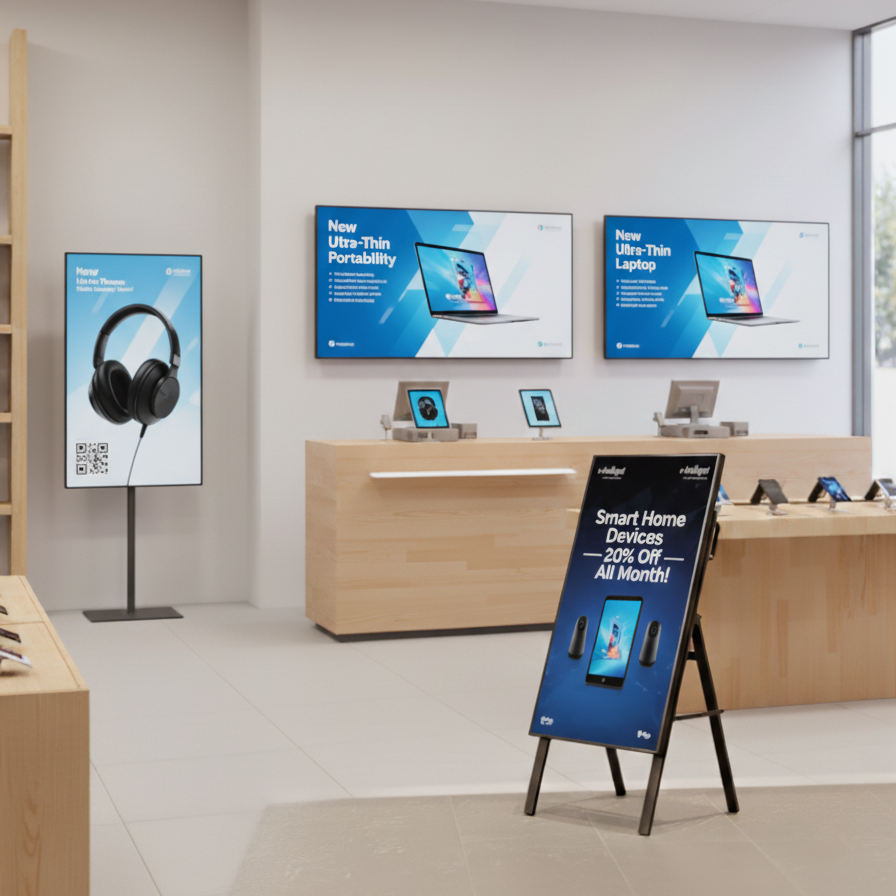
A screen outside the shop is trying to attract passers-by. A screen at the entrance might showcase the day’s biggest offer. A screen in the product area could help customers choose a product. At the checkout, the content might highlight complementary products.

If the same advert is playing everywhere, some messages will inevitably appear in the wrong context.

How to fix it

Give each screen its own purpose. Not all the content needs to be different, but it should suit the location where it is being shown.

Do not think of several screens as one big screen. They are several different opportunities to engage with the customer.

6. Nobody is responsible for the whole thing

This is probably the most important digital signage mistake. Digital signage is not finished when the screen goes on the wall. That is when everyday life begins.

Content needs to be created and updated, campaigns changed, screens monitored and decisions made about what should be shown where.

Who creates the content? Who updates the campaigns? Who checks that all the screens are working? Who decides what is shown where? And who notices if a screen has been switched off for three days?

Managing a digital signage solution requires time, expertise and experience. That is why you do not necessarily need to handle everything yourself.

An experienced digital signage partner can help manage the overall solution and make sure the system continues to work in everyday use – not just when it is first installed.


How to fix it

Consider who will take responsibility for the overall solution after implementation, not just during the initial installation. Taking responsibility does not mean that one person has to do everything themselves.

A digital signage partner can take care of the overall solution for you: monitoring screens, managing content and handling technical maintenance, as well as content production when needed.

When a partner takes care of the system, you do not have to spend your own time running it.

Digital signage is not ready when the screen goes on the wall. It is ready when its day-to-day use has been thought through as well.

How to avoid digital signage mistakes?

Six digital signage mistakes may sound like a lot, but they are really based on one fairly simple idea. Digital signage should be planned as a whole.

Before buying a screen, consider at least these five things:

  • 1. Where will the screen meet the customer?

    The location has a major impact on what kind of content will work.

  • 2. What do you want to achieve?

    Is the aim to attract customers into the shop, make purchasing decisions easier, increase sales or improve the customer experience?

  • 3. What will the customer have time to see?

    Content designed for passing customers needs a different pace from content shown in a waiting area.

  • 4. Who will take care of the content?

    Good content does not stay good forever. Campaigns change and circumstances evolve.

  • 5. How will you monitor the overall solution?

    An effective solution should also be reviewed critically from time to time. If something does not seem to be working, you can change it. One of the advantages of digital signage is precisely that you do not have to decide everything once and leave it set in stone.

Ultimately, good digital signage is a little like a good salesperson. It is in the right place, knows who it is talking to, knows how to say what matters and does not try to say everything at once. And most importantly, it knows when the right time is to say something.

Get more out of your digital signage

If you already have screens in use but making the most of them feels like hard work, the digital signage mistake may not be the screens themselves. The overall solution can often be improved with relatively small changes, such as refining the content, repositioning screens or changing how content updates are handled.

storefy provides digital signage solutions covering everything from acquiring screens and managing content to their ongoing use. These solutions allow you to manage multiple screens centrally and schedule content for different locations and times.

If you want to fix your digital signage mistakes: